






 LATEST ART BOOKS
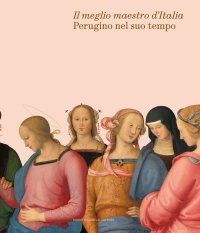
Perugino e il Suo Tempo. "Il Meglio Maestro d'Italia"
Perugia, Galleria Nazionale dell'Umbria, March 4 - June 11, 2023.
Edited by Picchiarelli V. and Pierini M.
Milano, 2023; bound, pp. 592, 650 col. ill., cm 24x21.
cover price: € 40.00
|
Books included in the offer:
Perugino e il Suo Tempo. "Il Meglio Maestro d'Italia"
Perugia, Galleria Nazionale dell'Umbria, March 4 - June 11, 2023.
Edited by Picchiarelli V. and Pierini M.
Milano, 2023; bound, pp. 592, 650 col. ill., cm 24x21.
FREE (cover price: € 40.00)
Michele Rocca e la pittura rococo a Roma
Brescia, 2004; bound in a case, pp. 310, b/w and col. ill., tavv., cm 24,5x31,5.
FREE (cover price: € 180.00)
Cucinare per gli amici
Translation by S. Mancuso.
Milano, 2012; clothbound, pp. 269, ill., cm 21x26,5.
(Gli Illustrati).
FREE (cover price: € 29.90)
City Painters in the Burgundian Netherlands
Wisse J.
Brepols Publishers
English and French Text.
Turnhout, 2015; hardback, pp. 300, 50 col. ill., cm 19x25.
(Ars Nova. 6).
series: Ars Nova.
ISBN: 2-503-51231-3 - EAN13: 9782503512310
Subject: Painting
Period: 1400-1800 (XV-XVIII) Renaissance
Places: Europe
Languages: 

Weight: 0.63 kg
Drawing on extensive firsthand documentation, this book reconstructs the origins and development of the official city painter in the Burgundian Netherlands over the course of the fifteenth century, and addresses the changing status of the artists.
Around 1400 a new official position was created for artists in several major centers in the southern Netherlands, i.e. Antwerp, Louvain, Malines. Appointed by the municipal government, these city painters (called stadsmeester schilders) were paid an annual salary and provided with the benefits and title of civic office. Their primary responsibility was to organize and decorate an annual procession known as the ommegang. While this role continued uninterruptedly for the next one hundred years, for at least two painters -- Rogier van der Weyden in Brussels and Dieric Bouts in Louvain - the position was altered to encompass different and apparently more ambitious artistic goals. Drawing on extensive firsthand documentation from municipal accounts and records, this book reconstructs the origins and development of the official city painter over the course of the fifteenth century. At the same time, it addresses the changing status of artists during this period and examines civic patronage as an impetus for generating new artistic goals in the Burgundian Netherlands.

Pietro Bellotti Detto Canaletty. Un Vedutista Veneziano nella Francia dell'Ancien Régime
Il poliedrico SID in B/N. Nella pittura, nella scultura, nella grafica e nella street art
Building in Africa. Cape to Cairo in 150 days: experiences of an engineer

Gigante 2027. Catalogo nazionale delle monete italiane dal '700 alla fine della lira
Il libro della magia cerimoniale. La tradizione segreta nella Goetia
Conte e Mattarella. Sul palcoscenico e dietro le quinte del Quirinale. Un racconto sulle istituzioni
