






 LATEST ART BOOKS
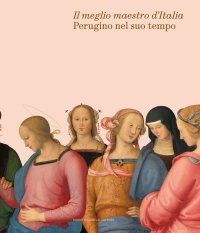
Perugino e il Suo Tempo. "Il Meglio Maestro d'Italia"
Perugia, Galleria Nazionale dell'Umbria, March 4 - June 11, 2023.
Edited by Picchiarelli V. and Pierini M.
Milano, 2023; bound, pp. 592, 650 col. ill., cm 24x21.
cover price: € 40.00
|
Books included in the offer:
Perugino e il Suo Tempo. "Il Meglio Maestro d'Italia"
Perugia, Galleria Nazionale dell'Umbria, March 4 - June 11, 2023.
Edited by Picchiarelli V. and Pierini M.
Milano, 2023; bound, pp. 592, 650 col. ill., cm 24x21.
FREE (cover price: € 40.00)
Michele Rocca e la pittura rococo a Roma
Brescia, 2004; bound in a case, pp. 310, b/w and col. ill., tavv., cm 24,5x31,5.
FREE (cover price: € 180.00)
Cucinare per gli amici
Translation by S. Mancuso.
Milano, 2012; clothbound, pp. 269, ill., cm 21x26,5.
(Gli Illustrati).
FREE (cover price: € 29.90)
La Ville et la Mort. Saint-Laurent de Grenoble, 2000 ans de tradition funéraire
Renée Colardelle
Brepols Publishers
French Text.
Turnhout, 2008; paperback, pp. 413, 364 b/w ill., cm 22x28.
(Bibliothèque de l'Antiquité Tardive. BAT 11).
series: Bibliothèque de l'Antiquité Tardive. BAT 0011
ISBN: 2-503-52818-X - EAN13: 9782503528182
Period: 0-1000 (0-XI) Ancient World
Languages: 
Weight: 1.48 kg
La fouille de Saint-Laurent montre l'évolution, depuis l'Antiquité, du principal site funéraire grenoblois. Parmi plusieurs mausolées de la voie des Alpes, entre Isère et montagne, un édifice pourvu d'une crypte funéraire dallée garnie d'une banquette, d'une niche et d'une ou deux fenestellae, est certainement vers 400 la memoria de l'un des premiers évêques. Le corps saint suscite le regroupement de nombreuses sépultures, formae et sarcophages. Une église cruciforme à bras triconques superposés s'enracine sur cette memoria : elle semble être la basilique épiscopale qu'en présence de la cour burgonde Avit de Vienne consacre, d'après ses Homiliae, en 516. Vers 600, elle sera voûtée et richement décorée. Durant tout le haut Moyen Âge, Saint-Laurent sera la plus importante des églises funéraires suburbaines (Saint-Antoine, Saint-Sixte et Saint-Ferréol). Une contre-église remplace vers 800 la memoria dont elle conserve les cryptes. Ce pôle occidental est lié par une nef rectangulaire à un classique choeur orienté sur transept, dont le bras oriental de l'église précédente forme une des cryptes. Prieuré de Saint-Chaffre en 1012, l'église devient paroissiale d'un faubourg que ses murs protègent, renforcés au XIVe siècle par divers dispositifs militaires. Avec son clocher-porche, ses décors romans, son cloître et son cimetière, elle évoluera ensuite plus banalement jusqu'à la Révolution, fin du prieuré, à la découverte de Saint-Oyand par Champollion-Figeac et aux restaurations sous l'égide de Mérimée. L'étude diachronique souligne l'importance des pratiques funéraires et du culte des saints dans le christianisme gaulois ainsi que la manière dont se concilient les dispositifs architecturaux locaux et des pratiques et liturgies en perpétuelle transformation.

Pietro Bellotti Detto Canaletty. Un Vedutista Veneziano nella Francia dell'Ancien Régime
Il poliedrico SID in B/N. Nella pittura, nella scultura, nella grafica e nella street art
Building in Africa. Cape to Cairo in 150 days: experiences of an engineer

Gigante 2027. Catalogo nazionale delle monete italiane dal '700 alla fine della lira
Il libro della magia cerimoniale. La tradizione segreta nella Goetia
Conte e Mattarella. Sul palcoscenico e dietro le quinte del Quirinale. Un racconto sulle istituzioni
