






 LATEST ART BOOKS
Perugino e il Suo Tempo. "Il Meglio Maestro d'Italia"
Perugia, Galleria Nazionale dell'Umbria, March 4 - June 11, 2023.
Edited by Picchiarelli V. and Pierini M.
Milano, 2023; bound, pp. 592, 650 col. ill., cm 24x21.
cover price: € 40.00

|
Books included in the offer:
Perugino e il Suo Tempo. "Il Meglio Maestro d'Italia"
Perugia, Galleria Nazionale dell'Umbria, March 4 - June 11, 2023.
Edited by Picchiarelli V. and Pierini M.
Milano, 2023; bound, pp. 592, 650 col. ill., cm 24x21.
FREE (cover price: € 40.00)
Michele Rocca e la pittura rococo a Roma
Brescia, 2004; bound in a case, pp. 310, b/w and col. ill., tavv., cm 24,5x31,5.
FREE (cover price: € 180.00)

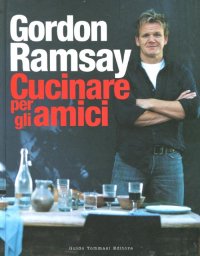
Cucinare per gli amici
Translation by S. Mancuso.
Milano, 2012; clothbound, pp. 269, ill., cm 21x26,5.
(Gli Illustrati).
FREE (cover price: € 29.90)
Towards a Typology of Soviet Mass Housing. Prefabrication in the USSR 1955 - 1991
Philipp Meuser
DOM Publishers
English Text.
Berlin, 2015; paperback, pp. 456, ill., cm 21x23.
ISBN: 3-86922-329-4 - EAN13: 9783869223292
Subject: Civil Architecture/Art
Languages: 
Weight: 0.5 kg
It is usually blamed for creating the most monotonous built environment in the history of mankind, thus constituting a symbol of individual suppression and dejection. The construction programme launched in the post-Stalinist era was the largest undertaken in modern architectural history worldwide. At the same time, Soviet mass housing fulfi lled a colossal social role, providing tens of millions of families with their own apartments. It shaped the culture and everyday life of nearly all Soviet citizens. Yet, due to the very scale of construction, it managed to evolve into a complex world denoting an abundance of myths and secrets, achievements and failures. Soviet mass housing is indisputably intriguing, but nevertheless it is still neglected as a theme of research. Therefore, the time is ripe for a critical appraisal of this ambitious project. The authors aim to identify the most signifi cant mass housing series designed and engineered from Kaliningrad to Vladivostok.

Pietro Bellotti Detto Canaletty. Un Vedutista Veneziano nella Francia dell'Ancien Régime
Officina Zanon 1946-2026. 80 anni di sapere artigiano-80 Years of craft knowledge. Ediz. bilingue

Conte e Mattarella. Sul palcoscenico e dietro le quinte del Quirinale. Un racconto sulle istituzioni
