






 LATEST ART BOOKS
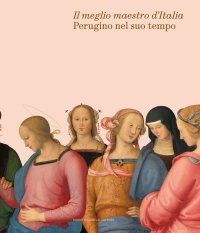
Perugino e il Suo Tempo. "Il Meglio Maestro d'Italia"
Perugia, Galleria Nazionale dell'Umbria, March 4 - June 11, 2023.
Edited by Picchiarelli V. and Pierini M.
Milano, 2023; bound, pp. 592, 650 col. ill., cm 24x21.
cover price: € 40.00
|
Books included in the offer:
Perugino e il Suo Tempo. "Il Meglio Maestro d'Italia"
Perugia, Galleria Nazionale dell'Umbria, March 4 - June 11, 2023.
Edited by Picchiarelli V. and Pierini M.
Milano, 2023; bound, pp. 592, 650 col. ill., cm 24x21.
FREE (cover price: € 40.00)
Michele Rocca e la pittura rococo a Roma
Brescia, 2004; bound in a case, pp. 310, b/w and col. ill., tavv., cm 24,5x31,5.
FREE (cover price: € 180.00)
Cucinare per gli amici
Translation by S. Mancuso.
Milano, 2012; clothbound, pp. 269, ill., cm 21x26,5.
(Gli Illustrati).
FREE (cover price: € 29.90)
The Aesthetics of Anarchy. Art and Ideology in the Early Russian Avant-Garde
Gourianova Nina
University of California Press
Berkeley, 2012; hardback, pp. 343, ill., cm 17x24.
ISBN: 0-520-26876-8 - EAN13: 9780520268760
Subject: Essays (Art or Architecture)
Languages: 
Weight: 0.7 kg
In this groundbreaking study, Nina Gurianova identifies the early Russian avant-garde (1910-1918) as a distinctive movement in its own right and not a preliminary stage to the Constructivism of the 1920s. Gurianova identifies what she terms an "aesthetics of anarchy" - art-making without rules - that greatly influenced early twentieth-century modernists. Setting the early Russian avant-garde movement firmly within a broader European context, Gurianova draws on a wealth of primary and archival sources by individual writers and artists, Russian theorists, theorizing artists, and German philosophers. Unlike the post-revolutionary avant-garde, which sought to describe the position of the artist in the new social hierarchy, the early Russian avant-garde struggled to overcome the boundaries defining art and to bridge the traditional gap between artist and audience. As it explores the aesthetics embraced by the movement, the book shows how artists transformed literary, theatrical, and performance practices, eroding the traditional boundaries of the visual arts and challenging the conventions of their day.

Pietro Bellotti Detto Canaletty. Un Vedutista Veneziano nella Francia dell'Ancien Régime
Officina Zanon 1946-2026. 80 anni di sapere artigiano-80 Years of craft knowledge. Ediz. bilingue

Conte e Mattarella. Sul palcoscenico e dietro le quinte del Quirinale. Un racconto sulle istituzioni
