






 LATEST ART BOOKS
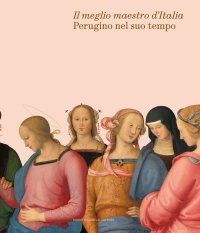
Perugino e il Suo Tempo. "Il Meglio Maestro d'Italia"
Perugia, Galleria Nazionale dell'Umbria, March 4 - June 11, 2023.
Edited by Picchiarelli V. and Pierini M.
Milano, 2023; bound, pp. 592, 650 col. ill., cm 24x21.
cover price: € 40.00
|
Books included in the offer:
Perugino e il Suo Tempo. "Il Meglio Maestro d'Italia"
Perugia, Galleria Nazionale dell'Umbria, March 4 - June 11, 2023.
Edited by Picchiarelli V. and Pierini M.
Milano, 2023; bound, pp. 592, 650 col. ill., cm 24x21.
FREE (cover price: € 40.00)
Michele Rocca e la pittura rococo a Roma
Brescia, 2004; bound in a case, pp. 310, b/w and col. ill., tavv., cm 24,5x31,5.
FREE (cover price: € 180.00)
Cucinare per gli amici
Translation by S. Mancuso.
Milano, 2012; clothbound, pp. 269, ill., cm 21x26,5.
(Gli Illustrati).
FREE (cover price: € 29.90)
Sir John Vanbrugh and the Vitruvian Landscape
Dalton Caroline
Routledge
English Text.
Oxford, 2012; hardback, pp. 256, col. ill., cm 21x25.
ISBN: 0-415-61163-6 - EAN13: 9780415611633
Subject: Civil Architecture/Art,Gardens and Parks
Period: 1400-1800 (XV-XVIII) Renaissance
Languages: 
Weight: 0.83 kg
In Sir John Vanbrugh and the Vitruvian Landscape Caroline Dalton seeks to explain Vanbrugh's distinctive style of landscape architecture. The natural and moral philosophy of Marcus Vitruvius Pollio (Vitruvius), Euclid, Plato and Epicurus is traced through the Arabic scientists of the Middle Ages into the Italian Renaissance. The book examines the impact of science and humanism on the landscape ethos of Leon Battista Alberti in the Quattrocento and of Andrea Palladio a century later, and looks for parallels with the early Enlightenment in England from 1660 onwards. It becomes clear that the scientific advances and the political, social and economic changes associated with the Enlightenment created an atmosphere where Vanbrugh could thrive. By reference to the writing of Vitruvius, Alberti and Palladio and by utilizing his innate skills as an artist, Vanbrugh combined the science of Vitruvian geometry with the philosophy of the Ancients to create a new English landscape.
The text is illustrated throughout with a hundred images, including eighteenth-century maps and plans which have not previously been published, alongside geometrical analysis and computer-generated reconstructions of Vanbrugh's landscapes. The author has combined her extensive knowledge of information technology with her experience as a landscape historian, to produce an innovative work which questions our previous understanding of the first English landscape architect. The book is essential reading for students studying the history of the eighteenth-century landscape, as well as appealing to those with a general interest in garden history.

Pietro Bellotti Detto Canaletty. Un Vedutista Veneziano nella Francia dell'Ancien Régime
Officina Zanon 1946-2026. 80 anni di sapere artigiano-80 Years of craft knowledge. Ediz. bilingue

Conte e Mattarella. Sul palcoscenico e dietro le quinte del Quirinale. Un racconto sulle istituzioni
