






 LATEST ART BOOKS
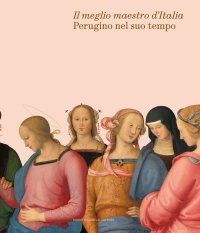
Perugino e il Suo Tempo. "Il Meglio Maestro d'Italia"
Perugia, Galleria Nazionale dell'Umbria, March 4 - June 11, 2023.
Edited by Picchiarelli V. and Pierini M.
Milano, 2023; bound, pp. 592, 650 col. ill., cm 24x21.
cover price: € 40.00
|
Books included in the offer:
Perugino e il Suo Tempo. "Il Meglio Maestro d'Italia"
Perugia, Galleria Nazionale dell'Umbria, March 4 - June 11, 2023.
Edited by Picchiarelli V. and Pierini M.
Milano, 2023; bound, pp. 592, 650 col. ill., cm 24x21.
FREE (cover price: € 40.00)
Michele Rocca e la pittura rococo a Roma
Brescia, 2004; bound in a case, pp. 310, b/w and col. ill., tavv., cm 24,5x31,5.
FREE (cover price: € 180.00)
Cucinare per gli amici
Translation by S. Mancuso.
Milano, 2012; clothbound, pp. 269, ill., cm 21x26,5.
(Gli Illustrati).
FREE (cover price: € 29.90)
Titian, Colonna and the Renaissance Science of Procreation. Equicola's Seasons of Desire
Colantuono Anthony
Ashgate Publishing Limited
English Text.
Aldershot, 2010; pp. 316, cm 17x24.
ISBN: 0-7546-6962-9 - EAN13: 9780754669623
Subject: Essays (Art or Architecture),Painting
Period: 1400-1800 (XV-XVIII) Renaissance
Languages: 
Weight: 0.98 kg
The study is organized in two parts, intimately interrelated. The first part is a study of Alfonso d'Este's camerino, with a general introduction, individual chapters on each of Bellini's and Titian's four pictorial "bacchanals," and a conclusion proposing a new and more accurate reconstruction of the layout of the room, also including a completely new way of interpreting the ensemble. The second part of the study concerns Colonna's Hypnerotomachia Poliphili, again beginning with its own introductory essay and advancing a completely new interpretation of the text.
The brief conclusion brings the insights of the two sections together, clarifying the historical relationship between the pictorial and literary works and explaining their larger cultural significance. Emphasizing Equicola's use of the Hypnerotomachia as a model for pictorial invention, the author reveals how Titian's remarkably sensuous paintings and Colonna's erotically-charged romance are related by their common reference to the neo-Aristotelian medical theory of the "libidinal seasons," and by corollary themes of marriage and sexual consummation. This peculiar intersection of cultural themes came to prominence in the context of a courtly world in which medical science was increasingly brought to bear on the problem of dynastic continuity.

Pietro Bellotti Detto Canaletty. Un Vedutista Veneziano nella Francia dell'Ancien Régime
Officina Zanon 1946-2026. 80 anni di sapere artigiano-80 Years of craft knowledge. Ediz. bilingue

Conte e Mattarella. Sul palcoscenico e dietro le quinte del Quirinale. Un racconto sulle istituzioni
