






 LATEST ART BOOKS
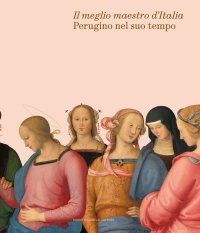
Perugino e il Suo Tempo. "Il Meglio Maestro d'Italia"
Perugia, Galleria Nazionale dell'Umbria, March 4 - June 11, 2023.
Edited by Picchiarelli V. and Pierini M.
Milano, 2023; bound, pp. 592, 650 col. ill., cm 24x21.
cover price: € 40.00
|
Books included in the offer:
Perugino e il Suo Tempo. "Il Meglio Maestro d'Italia"
Perugia, Galleria Nazionale dell'Umbria, March 4 - June 11, 2023.
Edited by Picchiarelli V. and Pierini M.
Milano, 2023; bound, pp. 592, 650 col. ill., cm 24x21.
FREE (cover price: € 40.00)
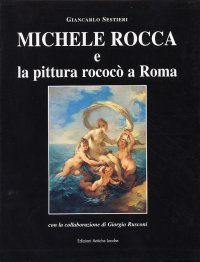
Michele Rocca e la pittura rococo a Roma
Brescia, 2004; bound in a case, pp. 310, b/w and col. ill., tavv., cm 24,5x31,5.
FREE (cover price: € 180.00)
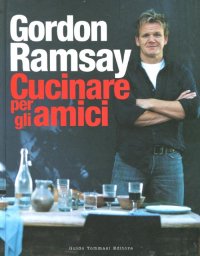
Cucinare per gli amici
Translation by S. Mancuso.
Milano, 2012; clothbound, pp. 269, ill., cm 21x26,5.
(Gli Illustrati).
FREE (cover price: € 29.90)
Lighting in the Modern Era
Alexander Koch
Arnoldsche Art Publishers
English, French and German Text.
Stuttgart, 2012; clothbound, pp. 128, 250 col. ill., cm 21x30.
ISBN: 3-89790-367-9 - EAN13: 9783897903678
Subject: Design
Period: 1960- Contemporary Period
Languages: 


Weight: 0.74 kg
Koch presents a spectrum of diverse designs, whose origins lay not only in the addition of basic geometrical shapes as with the pre-war avant-gardists, but also in the respective temperaments of the different countries of origin. It is very apparent that after the war America, Scandinavia and Italy exerted a strong influence on designs hitherto rather dominated by Bauhaus purism in Germany. An organic design concept, emancipated from the ideal of a machine and inspired by artists such as Alexander Calder, Henry Moore and Naum Gabo, along with new materials and manufacturing techniques, gave rise to designs with enormous innovative energy.
As in architecture, one can also speak of an 'international style' with regard to lighting design, whose protagonists are now amongst the designer elite of the twentieth century. Despite the new orientation towards linear, dynamically flowing forms that cross national borders, diversity within the sculptural appear- ance of lighting itself remains important as the primary design goal, along with the effect the lighting exudes. The space-defining quality of modern era lighting has been dedicated its own chapter, in which interiors by e.g. Richard Neutra and Walter Gropius testify to the scenographic potential of the new lighting culture.

Pietro Bellotti Detto Canaletty. Un Vedutista Veneziano nella Francia dell'Ancien Régime
Il poliedrico SID in B/N. Nella pittura, nella scultura, nella grafica e nella street art
Building in Africa. Cape to Cairo in 150 days: experiences of an engineer

Gigante 2027. Catalogo nazionale delle monete italiane dal '700 alla fine della lira
Il libro della magia cerimoniale. La tradizione segreta nella Goetia
Conte e Mattarella. Sul palcoscenico e dietro le quinte del Quirinale. Un racconto sulle istituzioni
