






 LATEST ART BOOKS
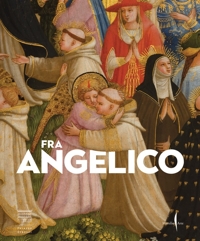
Beato Angelico. Ediz. a colori
Firenze, Palazzo Strozzi, September 26, 2025 - January 25, 2026.
Edited by Carl Brandon Strehlke.
Testi di Stefano Casciu, Marco Mozzo, Angelo Tartuferi.
Venezia, 2025; hardback, pp. 440, 300 col. ill., cm 25,2x29,8.
cover price: € 80.00
|
Books included in the offer:
Beato Angelico. Ediz. a colori
Firenze, Palazzo Strozzi, September 26, 2025 - January 25, 2026.
Edited by Carl Brandon Strehlke.
Testi di Stefano Casciu, Marco Mozzo, Angelo Tartuferi.
Venezia, 2025; hardback, pp. 440, 300 col. ill., cm 25,2x29,8.
FREE (cover price: € 80.00)
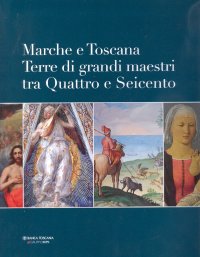
Marche e Toscana. Terre di grandi maestri tra Quattro e Seicento
Ospedaletto, 2007; bound, pp. 320, col. ill., col. plates, cm 25,5x29.
FREE (cover price: € 77.00)
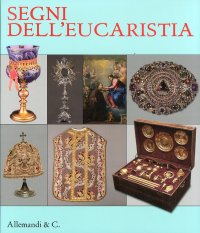
Segni dell'Eucarestia
Edited by M. Luisa Polichetti.
Ancona, Osimo, Loreto Jesi, Senigallia, Fabriano e Metelica, 23 giugno - 31 ottobre 2011.
Torino, 2011; paperback, pp. 221, b/w and col. ill., cm 24x28.
FREE (cover price: € 32.00)
Albert Gleizes. Catalogue Raisonné. Ouvrage Collectif
Somogy Editions d'Art
French Text.
Paris, 2004; paperback, pp. 832, 3000 b/w and col. ill., cm 25x28.
ISBN: 2-85056-286-6 - EAN13: 9782850562860
Subject: Monographs (Painting and Drawing)
Period: 1800-1960 (XIX-XX) Modern Period
Places: No Place
Languages: 
Weight: 4.84 kg
With several friends, including the writer René Arcos, Gleizes founded the Abbaye de Créteil outside Paris in 1906. This utopian community of artists and writers scorned bourgeois society and sought to create a nonallegorical, epic art based on modern themes. The Abbaye closed in 1908 due to financial difficulties. In 1909 and 1910 Gleizes met Robert Delaunay, Henri Le Fauconnier, Fernand Léger, and Jean Metzinger. In 1910 he exhibited at the Salon des Indépendants, Paris, and the Jack of Diamonds in Moscow. The following year he wrote the first of many articles. In collaboration with Metzinger, Gleizes wrote Du cubisme, published in 1912. The same year Gleizes helped found the Section d'Or.
In 1914 Gleizes again saw military service. His paintings had become abstract by 1915. Travels to New York, Barcelona, and Bermuda during the next four years influenced his stylistic evolution. His first solo show was held at the Galeries Dalmau, Barcelona, in 1916. Beginning in 1918 Gleizes became deeply involved in a search for spiritual values, as reflected in his painting and writing. In 1927 he founded Moly-Sabata, another utopian community of artists and craftsmen, in Sablons. His book, La Forme et l'histoire, published in 1932, examines Romanesque, Celtic, and Oriental art. In the 1930s Gleizes participated in the Abstraction-Création group. Later in his career Gleizes executed several large commissions, including the murals for the Paris World's Fair of 1937. In 1947 a major Gleizes retrospective took place in Lyons at the Chapelle du Lycée Ampère. From 1949 to 1950 Gleizes worked on illustrations for Pascal's Pensées. He executed a fresco, Eucharist, for the chapel Les Fontaines at Chantilly in 1952. Gleizes died in Avignon on June 23, 1953.

Gli occhi dell'arte. Scritti, studi e opere in onore di Ferdinando Peretti. Ediz. italiana e inglese

Giovanni Bernardo Carbone 1616-1683. Un ritrattista «alla moda» nella Genova di metà Seicento
Museo della Ceramica Contemporanea Mediterranea di Cava de' Tirreni. Ediz. a colori
Conte e Mattarella. Sul palcoscenico e dietro le quinte del Quirinale. Un racconto sulle istituzioni
