






 LATEST ART BOOKS
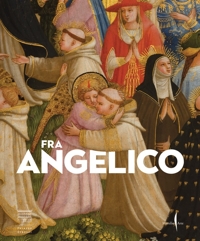
Beato Angelico. Ediz. a colori
Firenze, Palazzo Strozzi, September 26, 2025 - January 25, 2026.
Edited by Carl Brandon Strehlke.
Testi di Stefano Casciu, Marco Mozzo, Angelo Tartuferi.
Venezia, 2025; hardback, pp. 440, 300 col. ill., cm 25,2x29,8.
cover price: € 80.00
|
Books included in the offer:
Beato Angelico. Ediz. a colori
Firenze, Palazzo Strozzi, September 26, 2025 - January 25, 2026.
Edited by Carl Brandon Strehlke.
Testi di Stefano Casciu, Marco Mozzo, Angelo Tartuferi.
Venezia, 2025; hardback, pp. 440, 300 col. ill., cm 25,2x29,8.
FREE (cover price: € 80.00)
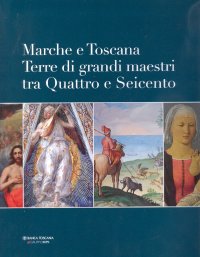
Marche e Toscana. Terre di grandi maestri tra Quattro e Seicento
Ospedaletto, 2007; bound, pp. 320, col. ill., col. plates, cm 25,5x29.
FREE (cover price: € 77.00)
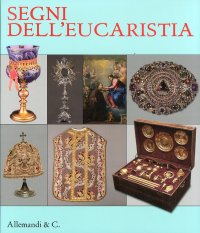
Segni dell'Eucarestia
Edited by M. Luisa Polichetti.
Ancona, Osimo, Loreto Jesi, Senigallia, Fabriano e Metelica, 23 giugno - 31 ottobre 2011.
Torino, 2011; paperback, pp. 221, b/w and col. ill., cm 24x28.
FREE (cover price: € 32.00)
Astro-Medicine. Astrology and Medicine, East and West
Sismel - Edizioni del Galluzzo
Edited by Akasoy A., Burnett C. and Yoeli-Tlalim R.
Tavarnuzze, 2008; paperback, pp. XII-277, cm 17x24.
(Micrologus library).
series: Micrologus library
ISBN: 88-8450-300-0 - EAN13: 9788884503008
Languages: 
Weight: 0.9 kg
The underlying framework is clear when the human body itself is regarded as being a 'little world' (microcosm) which corresponds in all its parts to the world as a whole (macrocosm). The association between human anatomy and the stars is found already in ancient Egypt and was later incorporated into Greek medical theory. A similar correlation was made in ancient China, with its system of Yin-yang and the five agents. Horoscopic astrology was already developed by the Babylonians who believed that the planets could determine the physiognomic characteristics of the child. Similar traditions exist in the medieval Islamic world.The concept of time as the element that links the human being with the cosmos already appears in the earliest Indian text on medicine, the Atharva Veda, and achieves its most elaborated form in the Buddhist tantric treatise of the Ka¯lacakra. The significance of the cycles of the moon, in particular, for the development of a disease, lies at the heart of the theory of 'critical days', which was espoused by doctors from Classical Antiquity into the early modern period.There was always criticism of being guided by astrology, especially on the grounds that certain practices were superstitious rather than rational. In the Indian context, the crucial question is that of the role of karma. Even in modern times the classical systematisation of personality types, based on a synthesis of astrological and medical concepts, has continued to inspire psychologists and educationalists.

Gli occhi dell'arte. Scritti, studi e opere in onore di Ferdinando Peretti. Ediz. italiana e inglese

Guerra e resistenza. Tra fame, razionamenti e borsa nera: l'incognita costante del mangiare
Folklands. Montagne, foreste, oceani e deserti attraverso simboli, miti, leggende e folklore
Museo della Ceramica Contemporanea Mediterranea di Cava de' Tirreni. Ediz. a colori
Conte e Mattarella. Sul palcoscenico e dietro le quinte del Quirinale. Un racconto sulle istituzioni
