






 LATEST ART BOOKS

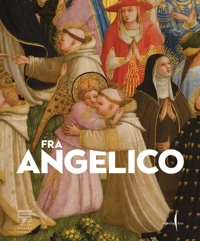
Beato Angelico
Firenze, Palazzo Strozzi, September 26, 2025 - January 25, 2026.
Edited by Carl Brandon Strehlke.
Testi di Stefano Casciu, Marco Mozzo, Angelo Tartuferi.
Venezia, 2025; hardback, pp. 440, 300 col. ill., cm 25,2x29,8.
cover price: € 80.00
|
Books included in the offer:
Beato Angelico
Firenze, Palazzo Strozzi, September 26, 2025 - January 25, 2026.
Edited by Carl Brandon Strehlke.
Testi di Stefano Casciu, Marco Mozzo, Angelo Tartuferi.
Venezia, 2025; hardback, pp. 440, 300 col. ill., cm 25,2x29,8.
FREE (cover price: € 80.00)
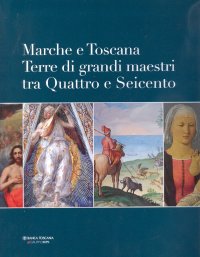
Marche e Toscana. Terre di grandi maestri tra Quattro e Seicento
Ospedaletto, 2007; bound, pp. 320, col. ill., col. plates, cm 25,5x29.
FREE (cover price: € 77.00)
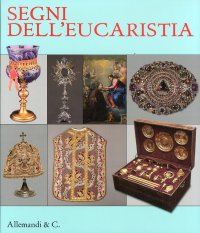
Segni dell'Eucarestia
Edited by M. Luisa Polichetti.
Ancona, Osimo, Loreto Jesi, Senigallia, Fabriano e Metelica, 23 giugno - 31 ottobre 2011.
Torino, 2011; paperback, pp. 221, b/w and col. ill., cm 24x28.
FREE (cover price: € 32.00)
Rivista la Biennale di Venezia 3/26. Pandemonium
Silvana Editoriale
Italian and English Text.
Cinisello Balsamo, 2026; paperback, pp. 224, b/w and col. ill., cm 24x32.
ISBN: 88-366-6652-3 - EAN13: 9788836666522
Subject: Magazines
Languages: 

Weight: 1.376 kg
Magazine, which resumed publication in October 2024
after fifty-three years of editorial silence.
Released to coincide with the opening of the 83rd Venice
International Film Festival, this issue brings together contributions
not only from scholars, scientists, and artists, but
also from film directors and professionals working across the
cinematic field. La Biennale's many disciplines - visual arts,
architecture, dance, music, theatre, and cinema - engage in
a "pandemonium" of original and exclusive contributions by
leading international figures.
The issue examines the age we are living in: the age of parody.
For centuries, humanity's confrontation with pain and injustice
gave rise to symbolic forms capable of processing the tragic.
Today, however, this mechanism appears to have broken
down. The tragic is no longer worked through but suspended
and neutralised, transformed into a consumable surface;
the sacred is imitated and inverted; language is emptied of
meaning and stripped of responsibility. This is parody: not
irony or playfulness, but the systematic reduction of reality
to surface, the dissipation of meaning. "I am the spirit that
always wills the good and always works the evil": this line
from Goethe's Faust captures the contemporary logic of a
world that presents itself as oriented towards the good while
consistently producing the opposite.
Conceived and produced exclusively in print, the Magazine
stands out for its plurality of languages and freedom of expression,
fostering graphic experimentation and the cross-pollination
of different forms and codes. Its extensive iconographic
apparatus - largely drawn from the Historical Archive of La
Biennale di Venezia and from photographic research conducted
both nationally and internationally - is one of the publication's
defining features.
Among the contributors to issue 3/26 are Francesco Artibani,
Davide Catenacci, Giacomo Biffi, Francesco Bonami, Gian Piero
Brunetta, Maurizio Cattelan, Carolina Cavalli, Sara Cosulich,
Maurizio Crippa, Rossana Dedola, Nathalie Djurberg, Declan
Donnellan, Bruno Forzani, Cesare Bisantis, Gelitin/Gelatin,
Carsten Höller, Francesca Amé, John Landis, Giulia D'Agnolo
Vallan, Alberto Manguel, Diego Marcon, Flavia Fossa Margutti,
Flavia Mastrella, Fabrizio Porcella, Antonio Rezza, Debora Rossi,
Julian Sasha, Mariagrazia Pontorno, Carlo Sini, Bernard Tschumi,
Giovanni Damiani, Jan Zwicky, Davide Brullo.
The cover features a still from François Truffaut's Fahrenheit
451 (1966).
The graphic design and layout are by Studio Tomo Tomo, Milan.

Gli occhi dell'arte. Scritti, studi e opere in onore di Ferdinando Peretti. Ediz. italiana e inglese

Armonismo. La luce precede la forma. Una teoria dello spazio tra luce, geometria e asimmetria
Conte e Mattarella. Sul palcoscenico e dietro le quinte del Quirinale. Un racconto sulle istituzioni
