






 LATEST ART BOOKS
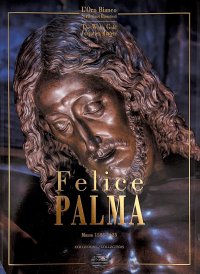
Felice Palma. Massa 1583-1625. Collezione / Collection.
Texts by Claudio Casini, Andrei Cristina, Ciarlo Nicola, Federici Fabrizio and Sara Ragni.
Italian and English Text.
Pontedera, 2024; bound in a case, pp. 289, b/w and col. ill., b/w and col. plates, cm 24,5x34.
(L'Oro Bianco. Straordinari Dimenticati. The White Gold Forgotten Masters).
cover price: € 160.00
|
Books included in the offer:
Felice Palma. Massa 1583-1625. Collezione / Collection.
Texts by Claudio Casini, Andrei Cristina, Ciarlo Nicola, Federici Fabrizio and Sara Ragni.
Italian and English Text.
Pontedera, 2024; bound in a case, pp. 289, b/w and col. ill., b/w and col. plates, cm 24,5x34.
(L'Oro Bianco. Straordinari Dimenticati. The White Gold Forgotten Masters).
FREE (cover price: € 160.00)
Le botteghe del marmo
Italian and English Text.
Ospedaletto, 1992; bound, pp. 153, 10 b/w ill., 60 col. ill., cm 24x29.
(Immagine).
FREE (cover price: € 34.49)
Museo Stefano Bardini. I Bronzetti e gli Oggetti d'Uso in Bronzo
Edited by Nesi A.
Firenze, 2009; paperback, pp. 191, 102 b/w ill., 7 col. ill., cm 17x24,5.
(Museo Stefano Bardini).
FREE (cover price: € 30.00)
Bronzetti e Rilievi dal XV al XVIII Secolo
Bologna, 2015; 2 vols., bound in a case, pp. 729, ill., col. plates, cm 21,5x30,5.
FREE (cover price: € 90.00)
Azulejo flowers. From the 15th century up to now
Massimiliano Piretti Editore
Edited by Aldis.
English Text.
Bologna, 2026; paperback, pp. 304, col. ill., cm 17x24.
ISBN: 88-6476-177-2 - EAN13: 9788864761770
Subject: Decorative Arts (Ceramics, Porcelain, Majolica)
Period: 1400-1800 (XV-XVIII) Renaissance,1800-1960 (XIX-XX) Modern Period,1960- Contemporary Period
Places: Europe
Languages: 
Weight: 0.98 kg
from the manuelino (mixing elements of Gothic, Mauritania and exotic Indian motifs) to modernism and later 20th-century styles.
The tiles of the 16th century were usually decorated with mythological and biblical stories, scenes from the lives of saints, paintings of hunting and allegorical compositions.
In the 16th century azulejos became widely used to decorate the interiors of churches, especially the altar part, where ceramics imitated expensive fabrics. The only element that has always been a part of all azulejo stories during the whole history of azulejo is a flower.
From Floreal Islimi, or Arabesque, to modern and futuristic interpretation. Sometimes a flower is just a discreet decorative accessory, and sometimes it is the protagonist. Passing through the centuries the azulejo flower tells us its history of beauty.

Pietro Bellotti Detto Canaletty. Un Vedutista Veneziano nella Francia dell'Ancien Régime

H-BI(M)ON. Heritage. Building Information Modelling/MONitoring. Dalla realtà al modello e ritorno
Conte e Mattarella. Sul palcoscenico e dietro le quinte del Quirinale. Un racconto sulle istituzioni
