






 LATEST ART BOOKS
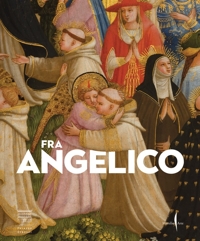
Beato Angelico
Firenze, Palazzo Strozzi, September 26, 2025 - January 25, 2026.
Edited by Carl Brandon Strehlke.
Testi di Stefano Casciu, Marco Mozzo, Angelo Tartuferi.
Venezia, 2025; hardback, pp. 440, 300 col. ill., cm 25,2x29,8.
cover price: € 80.00
|
Books included in the offer:
Beato Angelico
Firenze, Palazzo Strozzi, September 26, 2025 - January 25, 2026.
Edited by Carl Brandon Strehlke.
Testi di Stefano Casciu, Marco Mozzo, Angelo Tartuferi.
Venezia, 2025; hardback, pp. 440, 300 col. ill., cm 25,2x29,8.
FREE (cover price: € 80.00)
Marche e Toscana. Terre di grandi maestri tra Quattro e Seicento
Ospedaletto, 2007; bound, pp. 320, col. ill., col. plates, cm 25,5x29.
FREE (cover price: € 77.00)
Segni dell'Eucarestia
Edited by M. Luisa Polichetti.
Ancona, Osimo, Loreto Jesi, Senigallia, Fabriano e Metelica, 23 giugno - 31 ottobre 2011.
Torino, 2011; paperback, pp. 221, b/w and col. ill., cm 24x28.
FREE (cover price: € 32.00)
Stanislaw Fijalkowski.
DepArt
Milan, Dep Art Gallery, June 21 - September 16, 2023.
Edited by A. Addamiano and Zanchetta A.
Italian and English Text.
Milano, 2023; hardback, pp. 142, 70 b/w and col. ill., cm 22x28.
ISBN: 88-946494-7-4 - EAN13: 9788894649475
Subject: Essays (Art or Architecture),Monographs (Painting and Drawing),Painting
Period: 1960- Contemporary Period
Languages: 

Weight: 0 kg
A master of abstract painting, his compositions play with minimalist forms and color. All of the works are characterized by broad backgrounds, ranging from the delicate colors of his early years to the darker hues of his later period and often providing a backdrop for graphic signs and forms traceable to geometric elements.
During the 1960s, materiality and chromatic exuberance diminished to make way for pure painting. Circular shapes, cones, ribbons, or lines recur on the canvases, which, from the 1970s, will evolve into the famous Highways, which tend upward, tracing a path of elevation. Through the pictorial process, the artist freed himself from all chains binding him to the external world, thus seeking to reach the transcendent and opening a path to communication with the divine.
The ascent to freedom, foretold by Fija?kowski, is closely linked to interiority and spiritual life. In a modern world increasingly devoid of sacredness, the renunciation of materialism becomes a source of hope and salvation. As Russian painter Wassily Kandinsky argued, color and abstraction offer privileged access to the soul, allowing it to awaken and vibrate. Fija?kowski's works, although distant from traditional art, cannot be pigeonholed into the single category of abstraction; the artist immersed himself completely in the painting process, using it as a means of estranging himself from time and space, seeking to overcome the limits of two-dimensionality and circumscribing the painting as a foundational rite, preserving its secrets.
As curator Alberto Zanchetta writes, "The artist's main concern was not to create something new but something authentic. Depriving art of narcissistic trappings and intellectual elucubrations, Fija?kowski immersed himself in his expressive medium: painting flowed spontaneously, guided by ecstatic rapture."
From the youthful paintings influenced by post-Cubism and the Fauves to the mature works that explore pure painting and the spiritual ascent of the individual, Fija?kowski's artistic journey is manifested in all its maturity; through the reduction of signs and colors to the bare minimum, the artist emphasizes the emotional intensity of his works. Each painting is a singular entity and represents the authentic expression of an adventure linked to an intense and unrepeatable mental-emotional condition.

Dalle Alpi Giulie al mare. Viaggio nella biodiversità. From the Julian Alps to the Adriatic

Santa Maria dell'Anima. Dinamiche Sociali e Arte di una Comunità Straniera a Roma tra '400 e '600
