






 LATEST ART BOOKS
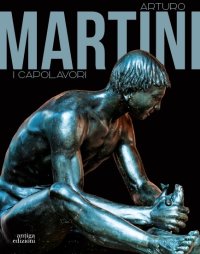
Arturo Martini. I capolavori
Treviso, Museo “luigi Bailo”, March 31 - July 30, 2023.
Edited by Stringa Nico and Fabrizio Malachin.
Cornuda, 2023; paperback, pp. 278, col. ill., cm 23x29.
cover price: € 33.00
|
Books included in the offer:
Arturo Martini. I capolavori
Treviso, Museo “luigi Bailo”, March 31 - July 30, 2023.
Edited by Stringa Nico and Fabrizio Malachin.
Cornuda, 2023; paperback, pp. 278, col. ill., cm 23x29.
FREE (cover price: € 33.00)
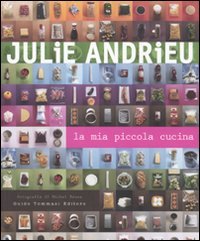
La mia piccola cucina
Illustrations by Soledad.
Translation by Marzano G.
Milano, 2009; paperback, pp. 359, ill., cm 21,5x26,5.
FREE (cover price: € 29.90)
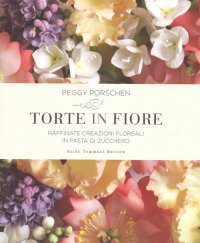
Torte in fiore. Raffinate creazioni floreali in pasta di zucchero
Translation by Destro P. and Tosi L.
Milano, 2014; clothbound, pp. 224, ill., cm 25x29.
(Gli Illustrati).
FREE (cover price: € 35.00)
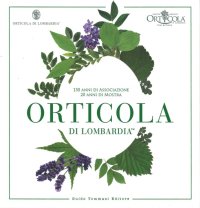
Orticola di Lombardia. 150 anni di associazione, 20 anni di mostra
Edited by Pizzoni F.
Milano, 2016; bound, pp. 279, ill., cm 24,5x24,5.
FREE (cover price: € 35.00)
Kitâb al-Diryâq. Thériaque de Paris
Aboca S.p.a.
Tiratura limitata a 999 copie.
Saggio critico in 6 lingue, Italiano, Spagnolo, Tedesco, Inglese, Francese e Arabo.
Sansepolcro, 2009; 2 vols., bound in a case, 15 numbered out of text col. plates, cm 28,5x37.
ISBN: 2-472-00337-4 - EAN13: 9782472003376
Subject: Maps, Documents, Old and Rare Books
Period: 1000-1400 (XII-XIV) Middle Ages
Places: Out of Europe
Languages: 
Weight: 2.19 kg
The work of Muhammad ibn Abi al-Fath and dated 1198, the manuscript is of certain interest to scholars of botany and the history of medicine. It includes illustrations of the medicinal plants used in the Arab world in the recipes drawn up by the most important physicians in the Greek tradition, such as Galen of Pergamum and Andromachus. The number of ingredients used to create the medicine increased progressively with the passing of the centuries until it exceeded one hundred.
Theriac originated in Graeco-Roman antiquity and its popularity was furthered in the Islamic world, giving rise to a vast literature on the subject. This particular manuscript is the earliest and most impressive of these treatises, and was probably produced for a very special patron of the arts who wished to know more of the medicine, but also to gaze on the beautiful coloured illustrations. Conserved in the Bibliothèque Nationale in Paris (arabe 2964), this treatise is called the Paris Kitâb al- Diryâq to distinguish it from other copies in Beirut, Cairo, St Petersburg and Vienna.
These latter codices are similar but were compiled at a later date. The growing popularity of theriac in Europe was partly due to the influence exercised by Latin translations of Arab treatises and to the development of trade in the Mediterranean: rare and unknown ingredients such as aromatizing "spices" and medicinal drugs were included in the composition of the preparation in the medical centres of Venice, Paris, Montpellier and others.
But the Kitâb al-Diryâq is not only a medical treatise: it is also an engaging series of tales and anecdotes about the nine Greek physicians of antiquity who contributed to the development of the medicine.The 15 plates in this folder are part of the Kitâb al-Diryâq, a magnificent Arab manuscript that describes the theriac, a medicinal compound that, originally used as a specific cure for bites of poisonous snakes and wild animals (= thèrion), was later widely used as a panacea. These extraordinary, illuminated and gilded illustrations transform each print into a valuable work of art redolent of the fascination of the Oriental world. Certain to be of interest to scholars of medical and botanical history, the prints depict mostly medicinal plants used in the Arab world, following the prescriptions of the most important physicians from Ancient Greece such as Galen and Andromachus.
The images are taken from the precious Kitâb al-Diryâq manuscript created in 1199 by Muhammad ibn Abi al-Fath and conserved in the Bibliothèque Nationale in Paris. The file comes with an in-depth critical essay with comments from some of the most important Arab scholars: Oleg Grabar, Francoise Micheau, Jaclynne Kerner, Anna Caiozzo and Marie Genèvieve Guesdon.
This collection is part of an ambitious project by Aboca Museum Edizioni that aims to contribute to the historic awareness and promotion of the international culture of medicinal plants.The comments on the manuscript, translated in six languages, are written by five expert Arabists who between them explain everything there is to know on the subject.
Jaclynne Kerner, a historian of Oriental art at California State University Long Beach, presents A Descriptive Reconstruction and a Classification of the Paris Kitâb al- Diryâq, describing the subject of each individual page.
Marie Geneviève Guesdon, a bibliologist at the Bibliothèque Nationale de France, gives an accurate History of the Manuscript and Codicological Presentation.
In his An Essay in Interpretation, Oleg Grabar, a professor of Islamic art at the universities of Princeton and Harvard, places the work in its historical and literary contexts and carries out an artistic analysis of the decorative work and illustrations.
Françoise Micheau, a lecturer in the Medieval History of Islamic Countries at the Sorbonne, expounds on the use of the medicine in the Graeco-Roman and Arab worlds, linking it with its use in the West, in her essay The Medical Purpose of the Book of Theriac.
Anne Caiozzo, an Arabist at the Université Paris-Diderot, dedicates her monograph The Three States of the Moon to an analysis of the superb title page, describing with fervour the magical and astrological myths and interpretations linked to this celestial body in the Arab world.
The work that has been handed down to us, written in ancient Arabic and with notes in Persian, consists of 36 sheets (72 pages) embellished with magnificent miniatures featuring traditional Arabizing motifs that only in a few cases have lost their details and brightness of colour. The introductory pages (1, 2, 3, 4, 5), which feature decorations and drawings, are devoted to the general contents and precede the two amazing pages of the frontispiece (6, 7) dedicated to the moon and its astrological and magical myths. The calligraphic pages that follow (from 8 to 49) are individual works of art in which the Kufic script is also used as a decorative feature. Following the title of the work, which is repeated several times, are the portraits of the nine medical scholars (Andromachus the Elder, Heraclides, Philagrius, Proclus, Pythagoras, Marinus, Magnus of Mesa, Andromachus the Younger and Galen), each with his own theriac recipe, and four anecdotes relating to Andromachus the Elder, Heraclides, Philagrius and Proclus.
The long presentation of the categories of poisonous snakes and "viper flesh" is linked to Andromachus the Younger. Then follow twelve pages (50 to 61) with the illustration of the plants used in the preparation of theriac: these include rocket, liquorice, cardamom, opium, white pepper, incense, capers, acacia, valerian, black pepper, garlic and wild leek. The final pages (62 to 73) contain a group of eleven medicamentous recipes based on poorly identified cooked meat.

Pietro Bellotti Detto Canaletty. Un Vedutista Veneziano nella Francia dell'Ancien Régime

La voce / le voci delle donne, dalla classicità all'era dell'intelligenza artificiale
Il poliedrico SID in B/N. Nella pittura, nella scultura, nella grafica e nella street art
Conte e Mattarella. Sul palcoscenico e dietro le quinte del Quirinale. Un racconto sulle istituzioni
