




 LATEST ART BOOKS
Felice Palma. Massa 1583-1625. Collezione / Collection.
Texts by Claudio Casini, Andrei Cristina, Ciarlo Nicola, Federici Fabrizio and Sara Ragni.
Italian and English Text.
Pontedera, 2024; bound in a case, pp. 289, b/w and col. ill., b/w and col. plates, cm 24,5x34.
(L'Oro Bianco. Straordinari Dimenticati. The White Gold Forgotten Masters).
cover price: € 160.00
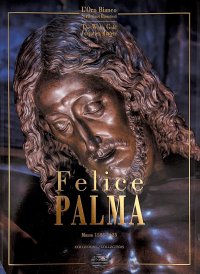
|
Books included in the offer:
Felice Palma. Massa 1583-1625. Collezione / Collection.
Texts by Claudio Casini, Andrei Cristina, Ciarlo Nicola, Federici Fabrizio and Sara Ragni.
Italian and English Text.
Pontedera, 2024; bound in a case, pp. 289, b/w and col. ill., b/w and col. plates, cm 24,5x34.
(L'Oro Bianco. Straordinari Dimenticati. The White Gold Forgotten Masters).
FREE (cover price: € 160.00)
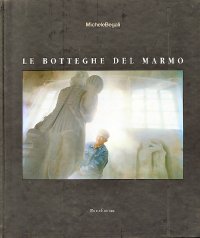
Le botteghe del marmo
Italian and English Text.
Ospedaletto, 1992; bound, pp. 153, 10 b/w ill., 60 col. ill., cm 24x29.
(Immagine).
FREE (cover price: € 34.49)
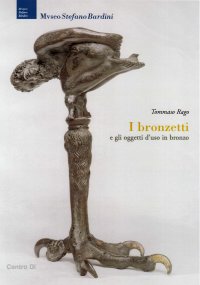
Museo Stefano Bardini. I Bronzetti e gli Oggetti d'Uso in Bronzo
Edited by Nesi A.
Firenze, 2009; paperback, pp. 191, 102 b/w ill., 7 col. ill., cm 17x24,5.
(Museo Stefano Bardini).
FREE (cover price: € 30.00)
Bronzetti e Rilievi dal XV al XVIII Secolo
Bologna, 2015; 2 vols., bound in a case, pp. 729, ill., col. plates, cm 21,5x30,5.
FREE (cover price: € 90.00)
Mario Nuti - l'Arte Come Testimonianza Civile. Opere dal 1948 al 1963. Mario Nuti - the Art as Civic Testimony. Works From 1948 To 1963
Stefanini Mauro. Nuti Nicola
Carlo Cambi Editore
Prato, Galleria Open Art, 2 luglio - 20 settembre 2014.
Italian and English Text.
Poggibonsi, 2024; hardback, pp. 84, b/w and col. ill., tavv., cm 22x30,5.
ISBN: 88-6403-179-0 - EAN13: 9788864031798
Subject: Essays (Art or Architecture),Monographs (Painting and Drawing),Painting
Period: 1800-1960 (XIX-XX) Modern Period,1960- Contemporary Period
Languages: 

Weight: 0.73 kg
In fact, the works of his neo-Cubist period demonstrate a solid structure which, despite the destructuring, solidly fuses the image to a centripetal nucleus. Ultimately, as an abstract painter Nuti couldn't (or wouldn't) divorce himself from the figure, and as a figurative painter, was unable to forget abstraction. Not that, on this account, his painting was unresolved, or hybrid; quite the opposite: in the end, what resulted was a formal enhancement; enrichment on a not-purely-theoretical plane.
His painting was born of painting, always, and not from theoretical assumptions - which at that time prevailed - or from ideological diktats. Perhaps this was why, when the group broke up in 1950, Nuti's return to the figure was slow, very slow, and meditated, transitioning through an informal dense with matter, humours, and expletives escaping clenched teeth.