






 LATEST ART BOOKS
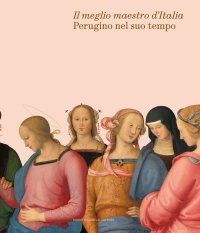
Perugino e il Suo Tempo. "Il Meglio Maestro d'Italia"
Perugia, Galleria Nazionale dell'Umbria, March 4 - June 11, 2023.
Edited by Picchiarelli V. and Pierini M.
Milano, 2023; bound, pp. 592, 650 col. ill., cm 24x21.
cover price: € 40.00
|
Books included in the offer:
Perugino e il Suo Tempo. "Il Meglio Maestro d'Italia"
Perugia, Galleria Nazionale dell'Umbria, March 4 - June 11, 2023.
Edited by Picchiarelli V. and Pierini M.
Milano, 2023; bound, pp. 592, 650 col. ill., cm 24x21.
FREE (cover price: € 40.00)
Michele Rocca e la pittura rococo a Roma
Brescia, 2004; bound in a case, pp. 310, b/w and col. ill., tavv., cm 24,5x31,5.
FREE (cover price: € 180.00)
Cucinare per gli amici
Translation by S. Mancuso.
Milano, 2012; clothbound, pp. 269, ill., cm 21x26,5.
(Gli Illustrati).
FREE (cover price: € 29.90)
Lutheran Churches in Early Modern Europe
Spicer Andrew (ed)
Ashgate Publishing Limited
Aldershot, 2018; hardback, pp. 475, b/w and col. ill., cm 17x24.
ISBN: 0-7546-6583-6 - EAN13: 9780754665830
Subject: Religious Architecture/Art
Languages: 
Weight: 1.28 kg
Until recently the impact of the Lutheran Reformation has been largely regarded in political and socio-economic terms, yet for most people it was not the abstract theological debates that had the greatest impact upon their lives, but what they saw in their parish churches every Sunday. This collection of essays provides a coherent and interdisciplinary investigation of the impact that the Lutheran Reformation had on the appearance, architecture and arrangement of early modern churches. Drawing upon recent research being undertaken by leading art historians and historians on Lutheran places of worship, the volume emphasises often surprising levels of continuity, reflecting the survival of Catholic fixtures, fittings and altarpieces, and exploring how these could be remodelled in order to conform with the tenets of Lutheran belief. The volume not only addresses Lutheran art but also the way in which the architecture of their churches reflected the importance of preaching and the administration of the sacraments. Furthermore the collection is committed to extending these discussions beyond a purely German context, and to look at churches not only within the Holy Roman Empire, but also in Scandinavia, the Baltic States as well as towns dominated by Saxon communities in areas such as in Hungary and Transylvania. By focusing on ecclesiastical 'material culture' the collection helps to place the art and architecture of Lutheran places of worship into the historical, political and theological context of early modern Europe.

Pietro Bellotti Detto Canaletty. Un Vedutista Veneziano nella Francia dell'Ancien Régime
Il poliedrico SID in B/N. Nella pittura, nella scultura, nella grafica e nella street art
Building in Africa. Cape to Cairo in 150 days: experiences of an engineer

Gigante 2027. Catalogo nazionale delle monete italiane dal '700 alla fine della lira
Il libro della magia cerimoniale. La tradizione segreta nella Goetia
Conte e Mattarella. Sul palcoscenico e dietro le quinte del Quirinale. Un racconto sulle istituzioni
