




 LATEST ART BOOKS
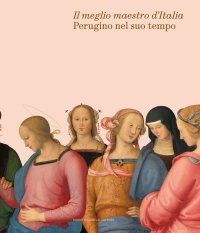
Perugino e il Suo Tempo. "Il Meglio Maestro d'Italia"
Perugia, Galleria Nazionale dell'Umbria, March 4 - June 11, 2023.
Edited by Picchiarelli V. and Pierini M.
Milano, 2023; bound, pp. 592, 650 col. ill., cm 24x21.
cover price: € 40.00
|
Books included in the offer:
Perugino e il Suo Tempo. "Il Meglio Maestro d'Italia"
Perugia, Galleria Nazionale dell'Umbria, March 4 - June 11, 2023.
Edited by Picchiarelli V. and Pierini M.
Milano, 2023; bound, pp. 592, 650 col. ill., cm 24x21.
FREE (cover price: € 40.00)
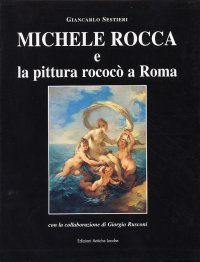
Michele Rocca e la pittura rococo a Roma
Brescia, 2004; bound in a case, pp. 310, b/w and col. ill., tavv., cm 24,5x31,5.
FREE (cover price: € 180.00)
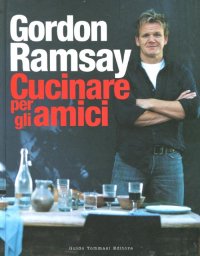
Cucinare per gli amici
Translation by S. Mancuso.
Milano, 2012; clothbound, pp. 269, ill., cm 21x26,5.
(Gli Illustrati).
FREE (cover price: € 29.90)
Un Paese sfigurato. Viaggio attraverso gli scempi d'Italia
Sgarbi Vittorio
Rizzoli - Libri Illustrati
Milano, 2003; paperback, pp. 128, ill., 32 col. plates, cm 15x21.
(Arte. Saggi).
series: Arte. Saggi
ISBN: 88-7423-154-7 - EAN13: 9788874231546
Subject: Essays (Art or Architecture),Urbanism
Period: No Period
Places: Italy
Languages: 
Weight: 0.42 kg
Do you know what an eyesore is? An eyesore is everything that we were not and that we have become, that we did not want but that has been imposed on us, that we could never have imagined but that instead has materialised, has become concrete, has become our face and our nightmare - the face and nightmare of our country, the horrible face of Italy. Because the eyesore has now become the dominant character of Italy."
Vittorio Sgarbi
In this volume, with the verve that is his distinguishing quality, Vittorio Sgarbi speaks about the eyesores which have been constructed or are planned in Italy and which are damaging the country's art and architectural heritage. In pamphlet form, the writer denounces the "wounds" that, with no respect for tradition or cultural integrity, have been inflicted on the Beautiful by architects of great distinction (such as Vittoriano Viganò, Gae Aulenti, Adolfo Natalini, Giancarlo De Carlo, Vittorio Gregotti). These architects, acting in the name of architectural renewal, in reality have asserted, with the backing of bodies in charge of preservation and conservation, their overwhelming "ego". The author also suggests solutions, which rather than having their source in the concrete form of a centralised preservation body, rather than a federal one, - and this need not exclude forms of sensitive privatisation - can be found in the concept of absolute safeguard based on conscience and respect for art. Sgarbi, who for many years now has been denouncing and fighting the senseless projects undermining the beauty of the Italian artistic heritage, has now put down all of his controversial debates in this book, and gives concrete examples which he considers the most important in order to explain his ideas.
Vittorio Sgarbi (Ferrara, 1952) graduated in philosophy and is an art critic and historian, and a "polemicist" as he loves to define himself. A provocative person, his first "public" appearances were on television in the role of art critic and commentator. He immediately distinguished himself because of his polemical nature (some of his confrontations on television are unforgettable) and with this he tackles topics on art, society, politics and culture.
In addition to curating numerous exhibitions in Italy and overseas (for example, the Valerio Adami show at the Centre George Pompidou in Paris), Sgarbi has written many essays, articles and books, including Carpaccio (1979), Il sogno della pittura (1985, Estense Prize 1985), Davanti all'immagine (1989, Bancarella Prize 1989), Lezioni private (1996); and then Il Bene e il Bello (2002) and Da Giotto a Picasso (2003). He writes for many newspapers and magazines ("L'Espresso", "Panorama"); he has conducted and continues to conduct television programs. He also has a political career: he has been a member of the Italian parliament since 1992, a europarlimentarian since 1991, and he was also Minister for Cultural Heritage.