






 LATEST ART BOOKS
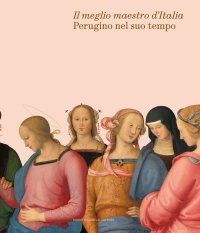
Perugino e il Suo Tempo. "Il Meglio Maestro d'Italia"
Perugia, Galleria Nazionale dell'Umbria, March 4 - June 11, 2023.
Edited by Picchiarelli V. and Pierini M.
Milano, 2023; bound, pp. 592, 650 col. ill., cm 24x21.
cover price: € 40.00
|
Books included in the offer:
Perugino e il Suo Tempo. "Il Meglio Maestro d'Italia"
Perugia, Galleria Nazionale dell'Umbria, March 4 - June 11, 2023.
Edited by Picchiarelli V. and Pierini M.
Milano, 2023; bound, pp. 592, 650 col. ill., cm 24x21.
FREE (cover price: € 40.00)
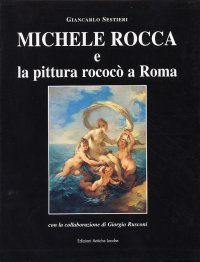
Michele Rocca e la pittura rococo a Roma
Brescia, 2004; bound in a case, pp. 310, b/w and col. ill., tavv., cm 24,5x31,5.
FREE (cover price: € 180.00)
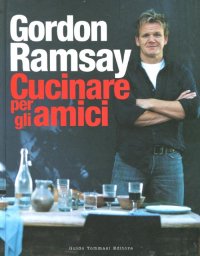
Cucinare per gli amici
Translation by S. Mancuso.
Milano, 2012; clothbound, pp. 269, ill., cm 21x26,5.
(Gli Illustrati).
FREE (cover price: € 29.90)
Carlo Cesare Malvasia. Felsina Pittrice. Volume 13: Lives of Domenichino and Francesco Gessi
Lorenzo Pericolo
Harvey Miller Publishers
Edited by E. Cropper and L. Pericolo.
Italian and English Text.
London, 2013; bound, pp. XXIV-414, 151 col. ill., cm 22x28.
(Felsina Pittrice. The Lives of the Bolognese Painters. 13).
series: Felsina Pittrice. The Lives of the Bolognese Painters
ISBN: 1-909400-00-9 - EAN13: 9781909400009
Subject: Painting
Period: 1400-1800 (XV-XVIII) Renaissance
Languages: 

Weight: 2.27 kg
Malvasia reports that he did not know Domenichino, and his reconstruction of the career of the master as he moved among Rome, Naples, and Bologna stands in stark contrast to Giovan Pietro Bellori's more sympathetic account, published in 1672. If, to redeem the supremacy of the Bolognese school, Malvasia downplays the problem of Domenichino's "erudition" and "fertility" of invention, he does so with hesitation and among unresolvable contradictions. His assimilation of Domenichino's art to the Roman and Tuscan canon is, then, profoundly polemical. In this light, Malvasia's life of Domenichino can be defined as the most tormented and ultimately unsuccessful eulogy in the Felsina pittrice: a great piece of art-historical criticism about an artist whose greatness Malvasia could not deny.
Malvasia's assessment of the artistic personality of Francesco Gessi turns upon the painter's rivalry with his master, Guido Reni, whose perfection in painting nevertheless remains unmatchable. In relating how Domenichino snatched away the highly talented Giovan Battista Ruggeri from his previous master, Francesco Gessi, Malvasia turns the conflicts inherent in Domenichino's life into a generational struggle between artistic factions. In the process, Malvasia provides important biographical information about Giovan Giacomo Sementi, another of Guido's disciples and Gessi's lifelong rival.

Pietro Bellotti Detto Canaletty. Un Vedutista Veneziano nella Francia dell'Ancien Régime

Aeroporto di Salerno - Pontecagnano 100 anni. Da Campo di Fortuna a Scalo Internazionale
Linear Elamite Inscriptions and Related Cuneiform Texts I. Linear Elamite Texts From Susa. Vol. 10
Gigante 2027. Catalogo nazionale delle monete italiane dal '700 alla fine della lira
Conte e Mattarella. Sul palcoscenico e dietro le quinte del Quirinale. Un racconto sulle istituzioni
