




 LATEST ART BOOKS
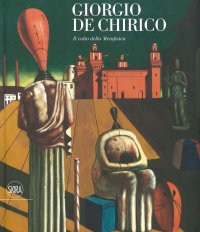
Giorgio De Chirico. Il volto della metafisica.
Genova, Palazzo Ducale, March 29 - July 7, 2019.
Edited by Noel-Johnson V.
Milano, 2019; bound, pp. 246, col. ill., cm 24x29.
(Arte Moderna. Cataloghi).
cover price: € n.d.
|
Books included in the offer:
Giorgio De Chirico. Il volto della metafisica.
Genova, Palazzo Ducale, March 29 - July 7, 2019.
Edited by Noel-Johnson V.
Milano, 2019; bound, pp. 246, col. ill., cm 24x29.
(Arte Moderna. Cataloghi).
FREE (cover price: € n.d.)
Giorgio de Chirico. Nulla Sine Tragoedia Gloria
Atti del Convegno Internazionale di Studi - Auditorium Dell'Iri, Roma, October 15 - October 16, 1999.
Edited by Claudio Crescentini and Crescentini C.
Co-Editore: Associazione Culturale Shakespeare and Company 2.
Montecatini Terme, 2002; paperback, pp. 504, 188 b/w ill., 21 col. plates, cm 21x30.
(Shakespeare and Company. 2).
FREE (cover price: € 75.00)
Mutazioni. Segni e sogni del XX secolo. Da de Chirico a de Maria
Gavirate, Chiostro di Voltorre, February 23 - April 27, 2003.
Milano, 2003; paperback, pp. 108, ill., tavv., cm 16x22,5.
(Biblioteca d'Arte).
FREE (cover price: € 18.00)
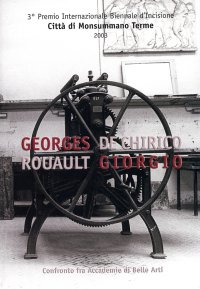
Georges Rouault, Giorgio De Chirico
Mosummano Terme, Villa Renatico Martini, November 23, 2003 - February 15, 2004.
Lyon, La Spirale, October 4 - October 31, 2004.
Edited by Cassinelli P., Giori M. and Viggiano D.
Italian and French Text.
Ospedaletto, 2004; paperback, pp. 150, b/w ill., b/w plates, cm 17x24.
FREE (cover price: € 13.00)
Miró
Janis Mink
Taschen
Köln, 2012; bound, pp. 96, col. ill., cm 24x30.
(Kleine Reihen).
series: Kleine Reihen
ISBN: 3-8365-3652-8 - EAN13: 9783836536523
Subject: Essays (Art or Architecture),Monographs (Painting and Drawing),Painting
Period: 1800-1960 (XIX-XX) Modern Period,1960- Contemporary Period
Languages: 
Weight: 0.78 kg
From the mid-twenties onward, Miró strove to leave direct objective references behind and developed the pictograms that typify his style. The pictures of this period, which include perhaps the most beautiful and significant ones of his whole oeuvre, dispense with spatiality and an unambiguous reference to objects. From then on, the surfaces were defined by numerals, writing, abstract emblems, and playful figures and creatures. In the postwar years be begin producing graphic works, ceramics, monumental murals, and sculptures. In these works, too, the Catalan artist sought the solid foundation of a figurative, symbolic art, featuring faces, stars, moons, rudimentary animal forms, and letters. Joan Miró developed in several stages his characteristic flowing calligraphic style and his world of forms resembling shorthand symbols; from Fauvism to Surrealism by way of his original childlike style, Miró sought to shake up the establishment and in doing so made a name for himself.