






 LATEST ART BOOKS
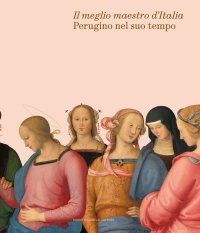
Perugino e il Suo Tempo. "Il Meglio Maestro d'Italia"
Perugia, Galleria Nazionale dell'Umbria, March 4 - June 11, 2023.
Edited by Picchiarelli V. and Pierini M.
Milano, 2023; bound, pp. 592, 650 col. ill., cm 24x21.
cover price: € 40.00
|
Books included in the offer:
Perugino e il Suo Tempo. "Il Meglio Maestro d'Italia"
Perugia, Galleria Nazionale dell'Umbria, March 4 - June 11, 2023.
Edited by Picchiarelli V. and Pierini M.
Milano, 2023; bound, pp. 592, 650 col. ill., cm 24x21.
FREE (cover price: € 40.00)
Michele Rocca e la pittura rococo a Roma
Brescia, 2004; bound in a case, pp. 310, b/w and col. ill., tavv., cm 24,5x31,5.
FREE (cover price: € 180.00)
Cucinare per gli amici
Translation by S. Mancuso.
Milano, 2012; clothbound, pp. 269, ill., cm 21x26,5.
(Gli Illustrati).
FREE (cover price: € 29.90)
The Grand Medieval Bestiary. The Animal in Illuminated Manuscripts
Heck Christian
Abbeville Press
English Text.
New York, 2018; hardback, pp. 620, 600 col. ill., cm 30x35.
ISBN: 0-7892-1127-0 - EAN13: 9780789211279
Subject: Maps, Documents, Old and Rare Books,Painting
Period: 1000-1400 (XII-XIV) Middle Ages
Languages: 
Weight: 0.01 kg
In his insightful opening chapters, the noted art historian Christian Heck explains that the prevalence of animals in illuminated manuscripts reflects their importance in medieval thought, an importance due in part to the agricultural society of that age, in which a variety of species-and not just docile pets-were the daily companions of man. Animals also had a greater symbolic significance than they do today: in popular fables, such as those of Reynard the Fox, they held up a mirror to the follies of mankind, and on the religious plane, they were understood as an integral part of God's creation, whose attributes and behaviors could be taken as clues to His plan of salvation.
The main part of the book explores the complex and fascinating iconography of the individual creatures most frequently depicted by medieval miniaturists. It is arranged in the manner of a proper bestiary, with essays on one hundred animals alphabetized by their Latin names, from the alauda, or lark, whose morning song was thought to be a hymn to Creation, to the vultur, which enjoyed a certain respect due to its impressive appearance, but whose taste for carrion also made it a symbol of the sinner who indulges in worldly pleasures. The selection includes a number of creatures that would now be considered fantastic, including the griffin, the manticore, and of course the fabled unicorn, tamable only by a gentle maiden. Not merely a study of art history, The Grand Medieval Bestiary uses a theme of timeless interest to present a panorama of medieval life and thought that will captivate even the most sophisticated modern reader.

Pietro Bellotti Detto Canaletty. Un Vedutista Veneziano nella Francia dell'Ancien Régime

Aeroporto di Salerno - Pontecagnano 100 anni. Da Campo di Fortuna a Scalo Internazionale
Linear Elamite Inscriptions and Related Cuneiform Texts I. Linear Elamite Texts From Susa. Vol. 10
Gigante 2027. Catalogo nazionale delle monete italiane dal '700 alla fine della lira
Conte e Mattarella. Sul palcoscenico e dietro le quinte del Quirinale. Un racconto sulle istituzioni
