



art and architecture bookstore
italiano

email/login

password

remember me on this computer

send


Forgot your password?
Insert your email/login here and receive it at the given email address.

send

chiudi

ricerca avanzata

chiudi

DEAL OF THE DAY

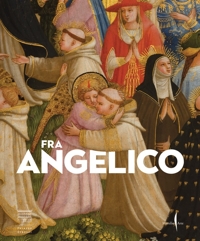
Beato Angelico

Firenze, Palazzo Strozzi, September 26, 2025 - January 25, 2026.
Edited by Carl Brandon Strehlke.
Testi di Stefano Casciu, Marco Mozzo, Angelo Tartuferi.
Venezia, 2025; bound, pp. 456, 300 col. ill., cm 24x29.

cover price: € 80.00

Beato Angelico

Total price: € 80.00 € 189.00 add to cart carrello

Books included in the offer:

Beato Angelico

Firenze, Palazzo Strozzi, September 26, 2025 - January 25, 2026.
Edited by Carl Brandon Strehlke.
Testi di Stefano Casciu, Marco Mozzo, Angelo Tartuferi.
Venezia, 2025; bound, pp. 456, 300 col. ill., cm 24x29.

FREE (cover price: € 80.00)

Beato Angelico

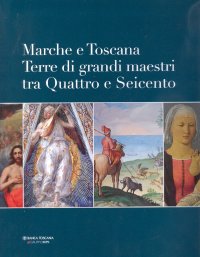
Marche e Toscana. Terre di grandi maestri tra Quattro e Seicento

Ospedaletto, 2007; bound, pp. 320, col. ill., col. plates, cm 25,5x29.

FREE (cover price: € 77.00)
Marche e Toscana. Terre di grandi maestri tra Quattro e Seicento

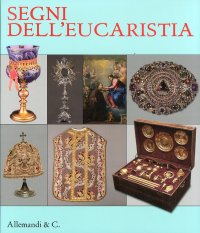
Segni dell'Eucarestia

Edited by M. Luisa Polichetti.
Ancona, Osimo, Loreto Jesi, Senigallia, Fabriano e Metelica, 23 giugno - 31 ottobre 2011.
Torino, 2011; paperback, pp. 221, b/w and col. ill., cm 24x28.

FREE (cover price: € 32.00)
Segni dell'Eucarestia

chiudi

Land and Labour. Studies in Roman Social and Economic History

Libreria Editrice L'Erma di Bretschneider

English Text.
Roma, 2013; clothbound, pp. 336, cm 13,5x20.
(Saggi di Storia Antica. 37).

series: Saggi di Storia Antica

ISBN: 88-913028-1-3 - EAN13: 9788891302816

Languages:  english text  

Weight: 0.75 kg


Modern scholarship dealing with the economy of the ancient world has developed rapidly in recent decades. Studies of ancient economic structures and history have in many respects achieve standards as a discipline comparable to those of economic history, using models and scenarios exactly as it is frequently seen in studies of later periods with better sources. The best example is perhaps the historical demography of Roman Italy. It was a marginal field of research until the early 1990s, but is now one of the key subjects in the study of Roman economy with a lively debate between the followers of a low count reconstruction of the demographic development in Roman Italy versus the scholars who favour a high count. Furthermore, quantitative studies have become serious scholarship and are no longer despised as only number games' as is apparent, for instance, from the new Oxford Roman Economy Project.' This is due to the great amount of published archaeological material such as terra sigillata, amphorae and shipwrecks. It is also illustrated by the shift from the predominant orthodoxy of the primitivism in the 1970s and 1980s to theoretical and methodological orientations inspired by the so-called New Institutional Economics and a diversity of approaches. But it has also rightly been pointed out that the struggle between primitivists' and modernists' , which still, a century later, continues to haunt scholarly discussions, often under the revealing name of minimalists and maximalists, signifying that the problem has often wrongly been reduced to one of quantities, mainly of trade. All the chapters of this book were originally published as articles or contributions to proceedings of different conferences between 1990 and 2010.

YOU CAN ALSO BUY


SPECIAL OFFERS AND BESTSELLERS
€ 239.40
€ 252.00 -5%

ships in 2/3 weeks


design e realizzazione: Vincent Wolterbeek / analisi e programmazione: Rocco Barisci