






 LATEST ART BOOKS
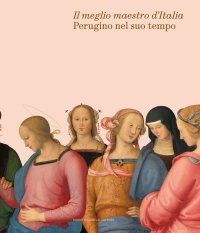
Perugino e il Suo Tempo. "Il Meglio Maestro d'Italia"
Perugia, Galleria Nazionale dell'Umbria, March 4 - June 11, 2023.
Edited by Picchiarelli V. and Pierini M.
Milano, 2023; bound, pp. 592, 650 col. ill., cm 24x21.
cover price: € 40.00
|
Books included in the offer:
Perugino e il Suo Tempo. "Il Meglio Maestro d'Italia"
Perugia, Galleria Nazionale dell'Umbria, March 4 - June 11, 2023.
Edited by Picchiarelli V. and Pierini M.
Milano, 2023; bound, pp. 592, 650 col. ill., cm 24x21.
FREE (cover price: € 40.00)
Michele Rocca e la pittura rococo a Roma
Brescia, 2004; bound in a case, pp. 310, b/w and col. ill., tavv., cm 24,5x31,5.
FREE (cover price: € 180.00)
Cucinare per gli amici
Translation by S. Mancuso.
Milano, 2012; clothbound, pp. 269, ill., cm 21x26,5.
(Gli Illustrati).
FREE (cover price: € 29.90)
The Pucci of Florence. Patronage and Politics in Renaissance Italy
Carla D'Arista
Harvey Miller Publishers
Italian and English Text.
London, 2021; bound, pp. 359, 296 col. ill., cm 22x28.
(The Medici Archive Project. 6).
series: The Medici Archive Project.
ISBN: 1-912554-25-9 - EAN13: 9781912554256
Languages: 

Weight: 1 kg
Shrewd and ruthless, the Pucci were Medici loyalists whose political and cultural alignment with the most powerful family in Renaissance Florence was rewarded with wealth and influence. The Pucci's martial support for the Medici in the dangerous business of ruling Tuscany drove their transformation from a clan of minor guildsmen to a noble dynasty with three cardinals to its name. Over the next two centuries, they showcased their exalted status with art and architecture that mirrored Medici tastes and reflected the values of civic humanism. The political and religious turmoil of the High Renaissance is writ large in this vivid portrait of the Pucci cardinals and their artistic patronage, a cultural biography inflected by the expulsion of the Medici from Florence, the Sack of Rome, the Reformation, and the occupation of Italy by Emperor Charles V.
New archival evidence documents the chapels, palaces, and villas that were built, expanded, and decorated by the Pucci family in Rome, Tuscany, and Umbria. These celebrated projects were carried out by luminaries of Renaissance art and architecture: Michelozzo, the Pollaiuolo brothers, the Sangallo family, Baccio d'Agnolo, the Montelupo workshop, and others. A remarkable body of inventories reveals how the family's trials and tribulations shaped the fate of their estates and illustrates the role luxury goods played in the social ambitions of this newly-arrived family. A previously unknown catalogue of Palazzo Pucci tells the tale of the nineteenth-century dispersal of the family's priceless Renaissance artworks, a collection that once mirrored the splendor of the Medici court.

Pietro Bellotti Detto Canaletty. Un Vedutista Veneziano nella Francia dell'Ancien Régime

Aeroporto di Salerno - Pontecagnano 100 anni. Da Campo di Fortuna a Scalo Internazionale
Linear Elamite Inscriptions and Related Cuneiform Texts I. Linear Elamite Texts From Susa. Vol. 10
Gigante 2027. Catalogo nazionale delle monete italiane dal '700 alla fine della lira
Conte e Mattarella. Sul palcoscenico e dietro le quinte del Quirinale. Un racconto sulle istituzioni
