






 LATEST ART BOOKS
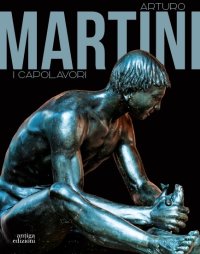
Arturo Martini. I capolavori
Treviso, Museo “luigi Bailo”, March 31 - July 30, 2023.
Edited by Stringa Nico and Fabrizio Malachin.
Cornuda, 2023; paperback, pp. 278, col. ill., cm 23x29.
cover price: € 33.00
|
Books included in the offer:
Arturo Martini. I capolavori
Treviso, Museo “luigi Bailo”, March 31 - July 30, 2023.
Edited by Stringa Nico and Fabrizio Malachin.
Cornuda, 2023; paperback, pp. 278, col. ill., cm 23x29.
FREE (cover price: € 33.00)
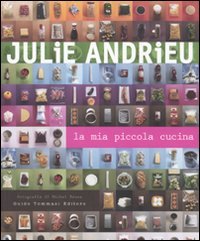
La mia piccola cucina
Illustrations by Soledad.
Translation by Marzano G.
Milano, 2009; paperback, pp. 359, ill., cm 21,5x26,5.
FREE (cover price: € 29.90)
Torte in fiore. Raffinate creazioni floreali in pasta di zucchero
Translation by Destro P. and Tosi L.
Milano, 2014; clothbound, pp. 224, ill., cm 25x29.
(Gli Illustrati).
FREE (cover price: € 35.00)

Orticola di Lombardia. 150 anni di associazione, 20 anni di mostra
Edited by Pizzoni F.
Milano, 2016; bound, pp. 279, ill., cm 24,5x24,5.
FREE (cover price: € 35.00)

The Atlas of Space Rocket Launch Sites
Brian Harvey - Singh Gurbir
DOM Publishers
Edited by Meuser P.
Brian Harvey with Gurbir Singh.
Edited by Paul Meuser.
Cartography by Katrin Soschinski.
English Text.
Berlin, 2022; bound, pp. 272, 500 col. ill., cm 24x30.
ISBN: 3-86922-758-3 - EAN13: 9783869227580
Subject: Civil Architecture/Art
Languages: 
Weight: 1 kg
This title is the first of its kind: An atlas of all major sites where space rockets have been launched since the World's first Sputnik in 1957. On 272 pages, the author Brian Harvey and his co-author Gurbir Singh showcase the steps of space travel as they have never been presented before. Detailed maps allow deep insights to places which are restricted to the public. This book offers a unique look at the physical footprints of Earth's launch sites. With most places hidden away in jungles, deserts, or amid the Central Asian steppes, these places exist for the most part out of the eye of the general public. With satellites facilitating our modern society and a modern space age ever-present in today's news cycle, it is now more important than ever to think about the imprint these undertakings leave on Earth. To begin to answer the new socio-economic questions raised by our rapid expansion into the void, we need to look no further than the cracks in the concrete of our planetary launch sites. The rusty train tracks leading to the pads break the pristine and sterile look of space and reopen our eyes to the realities of space exploration.

Pietro Bellotti Detto Canaletty. Un Vedutista Veneziano nella Francia dell'Ancien Régime

La voce / le voci delle donne, dalla classicità all'era dell'intelligenza artificiale
Il poliedrico SID in B/N. Nella pittura, nella scultura, nella grafica e nella street art
Conte e Mattarella. Sul palcoscenico e dietro le quinte del Quirinale. Un racconto sulle istituzioni
