






 LATEST ART BOOKS
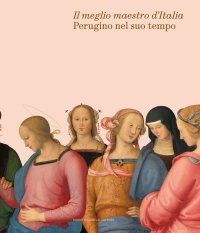
Perugino e il Suo Tempo. "Il Meglio Maestro d'Italia"
Perugia, Galleria Nazionale dell'Umbria, March 4 - June 11, 2023.
Edited by Picchiarelli V. and Pierini M.
Milano, 2023; bound, pp. 592, 650 col. ill., cm 24x21.
cover price: € 40.00
|
Books included in the offer:
Perugino e il Suo Tempo. "Il Meglio Maestro d'Italia"
Perugia, Galleria Nazionale dell'Umbria, March 4 - June 11, 2023.
Edited by Picchiarelli V. and Pierini M.
Milano, 2023; bound, pp. 592, 650 col. ill., cm 24x21.
FREE (cover price: € 40.00)
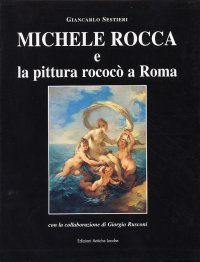
Michele Rocca e la pittura rococo a Roma
Brescia, 2004; bound in a case, pp. 310, b/w and col. ill., tavv., cm 24,5x31,5.
FREE (cover price: € 180.00)
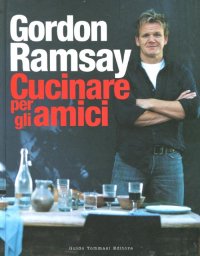
Cucinare per gli amici
Translation by S. Mancuso.
Milano, 2012; clothbound, pp. 269, ill., cm 21x26,5.
(Gli Illustrati).
FREE (cover price: € 29.90)
Jean-Yves Barrier. Architect and Urbanist. Architecte et Urbaniste
Ayers Andrew
Edition Axel Menges GMBH
English and French Text.
Fellbach, 2008; clothbound, pp. 202, b/w and col. ill., cm 25x30,5.
ISBN: 3-932565-24-X - EAN13: 9783932565243
Subject: Architects and their Practices,Urbanism
Period: 1960- Contemporary Period
Languages: 

Weight: 1.48 kg
Barrier is a great pragmatist, always interested in the specificities of each project and never in the application of "universal", readymade solutions.
Indeed a horror of serial-line architecture and doctrinaire approaches characterizes his oeuvre, and helps explain its great variety, as well as the lack of family resemblance among his realizations.
Barrier's career has been marked by an interest in environmentally friendly building and by experimentation in "passive", energy-saving design.
Urbanism has also figured prominently in his work, in keeping with a design approach where context, along with use, are the principal starting points. Here again, however, Barrier is not prescriptive, and it is the wider context in which he is working that informs his vision. Since his urban interventions to date have been in towns and villages in western and northwestern France, it is essentially from a 19th-century urbanistic tradition that he has drawn inspiration. In the town centre of St-Pierre-des-Corps, his realizations repaired and reconsolidated a fabric fractured by World War II bombings and insensitive post-war redevelopment;
at the riverside Deux-Lions development in Tours, he combined the internal layout of the city's typical 19th-century housing with massing and detailing evocative of a fishing village; at the Brandons estate in Normandy, his interventions were inspired by the site's garden-city past.
Although the results differ markedly each time, Barrier's working method is the same for every project: a thorough exploration of the many possibilities nourished by an ongoing dialogue with all the different participants, from the client to the suppliers to the construction professionals. It is this insistence on the architect's role as the keystone of the whole building process that allows his tailor-made designs to be translated faithfully into built form.

Pietro Bellotti Detto Canaletty. Un Vedutista Veneziano nella Francia dell'Ancien Régime
Officina Zanon 1946-2026. 80 anni di sapere artigiano-80 Years of craft knowledge. Ediz. bilingue

Conte e Mattarella. Sul palcoscenico e dietro le quinte del Quirinale. Un racconto sulle istituzioni
