




 NOVITA' ARTE
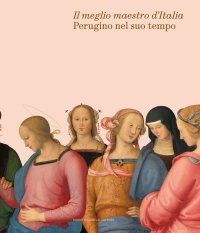
Perugino e il Suo Tempo. "Il Meglio Maestro d'Italia"
Perugia, Galleria Nazionale dell'Umbria, 4 marzo - 11 giugno 2023.
A cura di Picchiarelli V. e Pierini M.
Milano, 2023; ril., pp. 592, 650 ill. col., cm 24x21.
prezzo di copertina: € 40.00
|
Libri compresi nell'offerta:
Perugino e il Suo Tempo. "Il Meglio Maestro d'Italia"
Perugia, Galleria Nazionale dell'Umbria, 4 marzo - 11 giugno 2023.
A cura di Picchiarelli V. e Pierini M.
Milano, 2023; ril., pp. 592, 650 ill. col., cm 24x21.
OMAGGIO (prezzo di copertina: € 40.00)
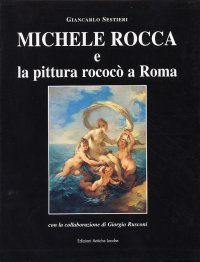
Michele Rocca e la pittura rococo a Roma
Brescia, 2004; ril. in cofanetto, pp. 310, ill. b/n e col., tavv., cm 24,5x31,5.
OMAGGIO (prezzo di copertina: € 180.00)
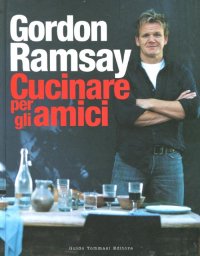
Cucinare per gli amici
Traduzione di S. Mancuso.
Milano, 2012; ril., pp. 269, ill., cm 21x26,5.
(Gli Illustrati).
OMAGGIO (prezzo di copertina: € 29.90)
Saline Ostia Antica. Ecological Urban Plot Plan with a 93% Integration of Renewable Energies
Sartogo Francesca
Alinea Editrice
Contributions of Massimo Bastiani, Valerio Calderaro and Joachim Eble.
Introductions of Hermann Scheer, Federico Butera and Arthouros Zervos.
Testo Inglese.
Firenze, 2000; br., pp. 192, ill. b/n e col., cm 21x27.
(Ecology and Architecture. 2).
(Ecology and Architecture. Environment strategies - renewable energies - sustainable landscape and architectural design. 2).
collana: Ecology and Architecture
ISBN: 88-8125-257-0 - EAN13: 9788881252572
Soggetto: Architettura e Arte Civile,Urbanistica e Viabilità
Periodo: 1960- Contemporaneo
Luoghi: Lazio
Testo in: 
Peso: 0.88 kg
In the second half of this century, the boundary between town and countryside has been interpreted as a frontier territory to be "civilized" through concrete and asphalt. Buildings, more often unlicensed rather than authorized (at times it is not even clear which are the worst), have thus gradually invaded the countryside, allowing here and there the survival of some little patch of land with elevated value added cultures, within urban expansions degraded by their project. The theme dealt with by the "Saline Ostia Antica" research falls exactly within this kind of issue. The question is: this can cerous building growth absorbing and suffocating nature is absolutely inevitable, or is it possible to transform the boundary between town and countryside into a subsystem capable of integrating the natural with the artificial (or viceversa), foreshadowing a model of sustainable urban development? The challenge accepted by this research is particularly hard, between the impending presence of the past in the nearby ruins of Ostia and a future made of innovative technologies and techniques. The (ambitious) idea regards the proposal of a development project sustainable under both the economical and the ecological point of view, non forgetting the cultural restrictions.