




 LATEST ART BOOKS
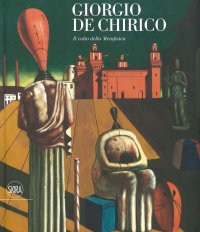
Giorgio De Chirico. Il volto della metafisica.
Genova, Palazzo Ducale, March 29 - July 7, 2019.
Edited by Noel-Johnson V.
Milano, 2019; bound, pp. 246, col. ill., cm 24x29.
(Arte Moderna. Cataloghi).
cover price: € n.d.
|
Books included in the offer:
Giorgio De Chirico. Il volto della metafisica.
Genova, Palazzo Ducale, March 29 - July 7, 2019.
Edited by Noel-Johnson V.
Milano, 2019; bound, pp. 246, col. ill., cm 24x29.
(Arte Moderna. Cataloghi).
FREE (cover price: € n.d.)
Giorgio de Chirico. Nulla Sine Tragoedia Gloria
Atti del Convegno Internazionale di Studi - Auditorium Dell'Iri, Roma, October 15 - October 16, 1999.
Edited by Claudio Crescentini and Crescentini C.
Co-Editore: Associazione Culturale Shakespeare and Company 2.
Montecatini Terme, 2002; paperback, pp. 504, 188 b/w ill., 21 col. plates, cm 21x30.
(Shakespeare and Company. 2).
FREE (cover price: € 75.00)
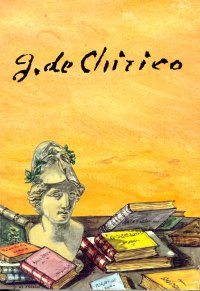
Mutazioni. Segni e sogni del XX secolo. Da de Chirico a de Maria
Gavirate, Chiostro di Voltorre, February 23 - April 27, 2003.
Milano, 2003; paperback, pp. 108, ill., tavv., cm 16x22,5.
(Biblioteca d'Arte).
FREE (cover price: € 18.00)
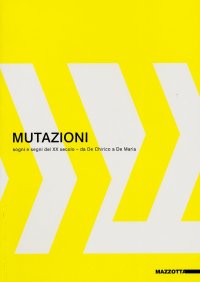
Georges Rouault, Giorgio De Chirico
Mosummano Terme, Villa Renatico Martini, November 23, 2003 - February 15, 2004.
Lyon, La Spirale, October 4 - October 31, 2004.
Edited by Cassinelli P., Giori M. and Viggiano D.
Italian and French Text.
Ospedaletto, 2004; paperback, pp. 150, b/w ill., b/w plates, cm 17x24.
FREE (cover price: € 13.00)
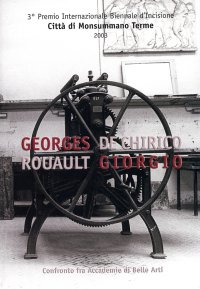
Carlo Carrà. La mia vita. Catalogo della mostra
Viviani Editore
Potenza, Pinacoteca Provinciale, April 4 - June 15, 2003.
Edited by M. Carrà and Pontiggia E.
Roma, 2003; paperback, pp. 132, b/w and col. ill., cm 21x29,5.
ISBN: 88-7993-091-5 - EAN13: 9788879930918
Subject: Essays (Art or Architecture),Graphic Arts (Prints, Drawings, Engravings, Miniatures),Monographs (Painting and Drawing)
Period: 1800-1960 (XIX-XX) Modern Period,1960- Contemporary Period
Places: No Place
Extra: Futurism and Avant-Gardes
Languages: 
Weight: 0.694 kg
Carrà's work of this time revealed the influence of Italian Divisionism, combined with the frank descriptiveness of nineteenth-century Lombard Naturalism. Carrà met Boccioni and Russolo in 1908 and, after his encounter with Marinetti, on 11 February 1910 signed with them the Manifesto of Futurist Painters, followed on 11 April 1910 by the Technical Manifesto of Futurist Painting.
Carrà's radical political and artistic interests were combined in the monumental painting Funeral of the Anarchist Galli, which he reworked after a trip to Paris in the fall of 1911, when he came into direct contact with Cubism. With Ardengo Soffici, Carrà contributed to the Florentine Futurist periodicalLacerba(1913-15).
In 1914, Carrà was back in Paris where he developed a closer relationship with Apollinaire and Picasso. At that time, he started to work in the medium of collage and words-in-freedom, and endorsed the Italian Interventionist movement in his book Guerrapittura of 1915. By 1916, Carrà had rejected many of the nihilistic premises of Futurism. In essays such as "Parlata su Giotto," and "Paolo Uccello costruttore, " published in La Voce that year, Carrà exalted the art of the Italian Trecento and Quattrocento primitives, for its clarity of form and spiritual dimension.
In 1917, he met Giorgio de Chirico in Ferrara and adapted his metaphysical iconography and compositional techniques to a series of bizarre still lifes and interiors. In 1918, Carrà, de Chirico, and his brother Alberto Savinio joined the magazine Valori Plastici, edited by Mario Broglio. The following year, he published his book Pittura metafisica, which celebrated the transcendent properties of pure form and commonplace objects. Carrà theoretical position, grounded in a post-war "return to order," signaled his break with the ironic classicism of de Chirico.
In addition to his fundamental role as a Futurist, and then as a catalyst for the Italian return to order, Carrà was an influential writer on art: in 1921 he began a seventeen-year tenure as art critic for the Milanese newspaper L'Ambrosiano. With Pine by the Sea (1920), a painting celebrated by the German critic Wilhelm Worringer, Carrà entered a short-lived phase of Magic Realism. By the mid-twenties, he had evolved his mature style that combined archaizing figures with an atmospheric brushwork, redolent of nineteenth century Impressionist Naturalism.
In the 1920s, he participated in the two exhibitions of the Novecento italiano, while his interest in the indigenous qualities of the Italian landscape drew him close to the regionalist Strapaese group. In the following decade Carrà received commissions for mural paintings under the regime, and signed Mario Sironi's Manifesto of Mural Painting in 1933. For the most part, he concentrated on seascapes of the Tuscan coast near Forte dei Marmi. In 1941 he was appointed professor of painting at the Accademia di Brera. In 1945 he published his autobiography La mia vita. Carrà died in Milan in 1966.