






 LATEST ART BOOKS
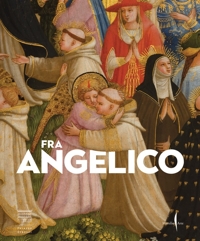
Beato Angelico. Ediz. a colori
Firenze, Palazzo Strozzi, September 26, 2025 - January 25, 2026.
Edited by Carl Brandon Strehlke.
Testi di Stefano Casciu, Marco Mozzo, Angelo Tartuferi.
Venezia, 2025; hardback, pp. 440, 300 col. ill., cm 25,2x29,8.
cover price: € 80.00
|
Books included in the offer:
Beato Angelico. Ediz. a colori
Firenze, Palazzo Strozzi, September 26, 2025 - January 25, 2026.
Edited by Carl Brandon Strehlke.
Testi di Stefano Casciu, Marco Mozzo, Angelo Tartuferi.
Venezia, 2025; hardback, pp. 440, 300 col. ill., cm 25,2x29,8.
FREE (cover price: € 80.00)
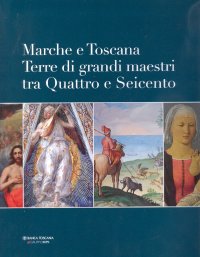
Marche e Toscana. Terre di grandi maestri tra Quattro e Seicento
Ospedaletto, 2007; bound, pp. 320, col. ill., col. plates, cm 25,5x29.
FREE (cover price: € 77.00)
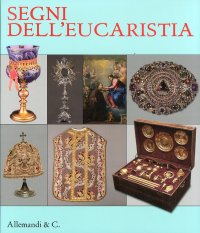
Segni dell'Eucarestia
Edited by M. Luisa Polichetti.
Ancona, Osimo, Loreto Jesi, Senigallia, Fabriano e Metelica, 23 giugno - 31 ottobre 2011.
Torino, 2011; paperback, pp. 221, b/w and col. ill., cm 24x28.
FREE (cover price: € 32.00)
Fausto Melotti. L'opera in ceramica
Skira
Rovereto, MART - Museo di Arte Moderna e Contemporanea di Trento e Rovereto, 30 Maggio - 14 settembre 2003.
Milano, 2003; bound in a case, pp. 476, 300 b/w and col. ill., 300 b/w and col. plates, cm 24x28.
(Archivi dell'Arte Moderna).
series: Archivi dell'Arte Moderna
ISBN: 88-8491-547-3 - EAN13: 9788884915474
Subject: Decorative Arts (Ceramics, Porcelain, Majolica),Essays (Art or Architecture),Monographs (Sculpture and Decorative Arts)
Period: 1800-1960 (XIX-XX) Modern Period,1960- Contemporary Period
Places: Italy
Languages: 
Weight: 3.166 kg
Born in Rovereto, Fausto Melotti was a man who gave great prestige to his city. From the middle of the 1930s, he put forward his abstract and almost two-dimensional sculptures, created using a bold, innovative language, in an Italy that was returning to figurative art. From that moment, his experimental vein never left him and this, together with an instinctive feeling for musical harmony, guided him in the creation of a work celebrated both in Italy and overseas as one of the most important artistic pieces to come out of Italy in the twentieth century. Together with Fontana, Burri or Vedova, Fausto Melotti is a leading figure in Italian art who inspired and continues to inspire many artists of later generations.
The long period of ceramic production came between the abstract and purist geometrism of the 1930s and the subtle threads of the 1960s-1980s, which rejected the "the stupid love of material".
With ceramics, this versatile artist found a malleable material, on a par with the plaster he debuted with or terracotta. The idea of the malleability of material balanced the expressive choice of "high" sculpture tied to metals, and if in this Melotti dispensed with sculpture in the round and folds, in ceramics he often reintroduced a "baroque breeze": "the artist - wrote Melotti - must have a belief but, I think, he 'must' also betray it". Thus in his creations Melotti pushed the material to its extremes, in an effort to create thinner and thinner layers or in seeking the greatest possible size for ovens, making a practical use for objects quite "impossible": coffee cups which are too high or narrow for teaspoons, bells which are too fragile to be chimed, jugs with handles that cannot be grasped, unimaginable vases for holding flowers.
This monumental catalogue raisonné brings together more than 1,500 ceramic works - sculptural pieces and decorative everyday objects - subdivided into various typologies: puppet theatres; figurative sculptures; large animals; feminine figures; the korai; sacred sculptures; bass relief; vases; bowls; cartouches; bestiary; wreaths; plates; lamps; holy fonts, angels, ONU; bells, frames, necklaces; coffee and tea sets; cups; ashtrays.
The book contains a detailed introductory essay by Massimo Carboni, professor of Aesthetics at the Academy of Fine Arts in Florence, who - in highlighting the innovative and experimental nature of this Trento sculptor in Italian twentieth century art - deals with Melotti's work principally from a theoretical and philosophical viewpoint. The subdivision into parts is by Antonella Commellato who works by typology and dedicates a thorough introductory essay of an historic-artistic nature to each cycle of works. The volume also comprises an illustrated biography, a bibliography and a list of exhibitions.

Dalle Alpi Giulie al mare. Viaggio nella biodiversità. From the Julian Alps to the Adriatic

Santa Maria dell'Anima. Dinamiche Sociali e Arte di una Comunità Straniera a Roma tra '400 e '600
