






 LATEST ART BOOKS
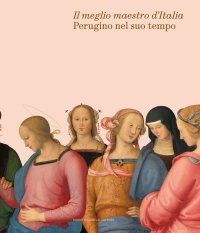
Perugino e il Suo Tempo. "Il Meglio Maestro d'Italia"
Perugia, Galleria Nazionale dell'Umbria, March 4 - June 11, 2023.
Edited by Picchiarelli V. and Pierini M.
Milano, 2023; bound, pp. 592, 650 col. ill., cm 24x21.
cover price: € 40.00
|
Books included in the offer:
Perugino e il Suo Tempo. "Il Meglio Maestro d'Italia"
Perugia, Galleria Nazionale dell'Umbria, March 4 - June 11, 2023.
Edited by Picchiarelli V. and Pierini M.
Milano, 2023; bound, pp. 592, 650 col. ill., cm 24x21.
FREE (cover price: € 40.00)
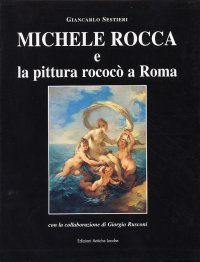
Michele Rocca e la pittura rococo a Roma
Brescia, 2004; bound in a case, pp. 310, b/w and col. ill., tavv., cm 24,5x31,5.
FREE (cover price: € 180.00)
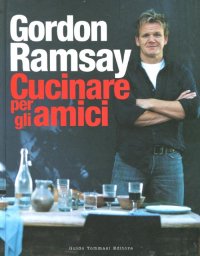
Cucinare per gli amici
Translation by S. Mancuso.
Milano, 2012; clothbound, pp. 269, ill., cm 21x26,5.
(Gli Illustrati).
FREE (cover price: € 29.90)
Castello di Rivoli. 20 anni d'arte contemporanea
Skira
Edited by Giannelli I.
Milano, 2005; bound, pp. 504, ill., cm 24x28.
(Arte Moderna).
series: Arte Moderna
ISBN: 88-7624-220-1 - EAN13: 9788876242205
Subject: Collections,Essays (Art or Architecture),Painting,Photography,Sculpture,Towns
Period: 1800-1960 (XIX-XX) Modern Period,1960- Contemporary Period
Places: Piedmont and Valle d'Aosta
Languages: 
Weight: 2.855 kg
The book therefore, is about two decades of contemporary art in painting, sculpture, photography, graphics, and video and installation work by established and emerging artists in Italy and overseas, including Enzo Cucchi, Keith Haring, Alberto Burri, Piero Manzoni, Emilio Vedova, Pier Paolo Calzolari, Helmut Newton, and Vanessa Beecroft, and artistic movements from the Trans-avant-garde to the Moderns.
The Castello di Rivoli was inaugurated on 18 December 1984, now more than twenty years ago, in an era in which there were very few institutions dedicated to contemporary art in Italy; in addition the activities of these bodies were not widely appreciated by the public. Today on the other hand, the Museum is recognised as the most important centre for contemporary art in Italy and is part of the network of leading international contemporary art bodies.
Over its twenty-year history, the Castello di Rivoli Museum has offered its public one hundred and ten temporary exhibitions, by and large independently produced. A catalogue was produced on each occasion, and numerous collateral initiatives were held including concerts, film festivals, performances, conferences and even exhibitions organised overseas. Three hundred paintings and sculptures, and two hundred photographs, were purchased over the years. Two libraries were set up; they contain around twenty five thousand publications and one thousand artist and documentary videos. Visitor attendance has gradually increased over time and now numbers around one hundred and fifteen thousand.
The temporary exhibitions held at the Museum interpret and give meaning to artistic creativity captured in the moment of its development. The permanent collection enables this same creativity to stand the test of time and its particular value systems. It is through a permanent collection that a museum of contemporary art builds its identity and clarifies its function, which is that of making known and valorising - through the documentation of the works of its most gifted artists - the dialectics fuelling the artistic debate of the time.
Through texts by Marcella Beccaria, Carolyn Christov-Bakargiev, Luigi Fassi, Donatella Galasso, Francesca Gambetta, Karin Gavassa, Bruna Genovesio, Chiara Oliveri Bertola, Andrea Viliani and Ugo Volli, this publication aims to provide, in a concise form, an account of the positive work undertaken by this museum over its twenty year history, enabling the reader to relive a number of high points through a sequence of carefully chosen images.
What emerges immediately from the photographs of the works, the exhibitions spaces and the artists, is this: a museum with ceaseless and diverse high-profile activities, an institution that has contributed enormously to the promotion of contemporary art in Italy.


Out of Catalog
