




 LATEST ART BOOKS
Felice Palma. Massa 1583-1625. Collezione / Collection.
Texts by Claudio Casini, Andrei Cristina, Ciarlo Nicola, Federici Fabrizio and Sara Ragni.
Italian and English Text.
Pontedera, 2024; bound in a case, pp. 289, b/w and col. ill., b/w and col. plates, cm 24,5x34.
(L'Oro Bianco. Straordinari Dimenticati. The White Gold Forgotten Masters).
cover price: € 160.00
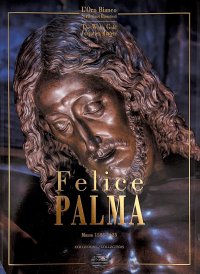
|
Books included in the offer:
Felice Palma. Massa 1583-1625. Collezione / Collection.
Texts by Claudio Casini, Andrei Cristina, Ciarlo Nicola, Federici Fabrizio and Sara Ragni.
Italian and English Text.
Pontedera, 2024; bound in a case, pp. 289, b/w and col. ill., b/w and col. plates, cm 24,5x34.
(L'Oro Bianco. Straordinari Dimenticati. The White Gold Forgotten Masters).
FREE (cover price: € 160.00)
Le botteghe del marmo
Italian and English Text.
Ospedaletto, 1992; bound, pp. 153, 10 b/w ill., 60 col. ill., cm 24x29.
(Immagine).
FREE (cover price: € 34.49)
Museo Stefano Bardini. I Bronzetti e gli Oggetti d'Uso in Bronzo
Edited by Nesi A.
Firenze, 2009; paperback, pp. 191, 102 b/w ill., 7 col. ill., cm 17x24,5.
(Museo Stefano Bardini).
FREE (cover price: € 30.00)
Bronzetti e Rilievi dal XV al XVIII Secolo
Bologna, 2015; 2 vols., bound in a case, pp. 729, ill., col. plates, cm 21,5x30,5.
FREE (cover price: € 90.00)
The Art of Campari
Silvana Editoriale
Londra, Estorick Collection of Modern Italian Art, July 4 - September 16, 2018.
Edited by Cremoncini R.
English Text.
Cinisello Balsamo, 2018; paperback, pp. 96, col. ill., cm 24x28.
(Design & Designers).
ISBN: 88-366-4026-5 - EAN13: 9788836640263
Subject: Design,Essays (Art or Architecture),Graphic Arts (Prints, Drawings, Engravings, Miniatures),Painting
Period: 1800-1960 (XIX-XX) Modern Period,1960- Contemporary Period
Languages: 
Weight: 0.52 kg
Since the nineteenth century, Campari has been responsible for some of the most distinctive and innovative advertising images created in Italy.
Founded in Milan in 1860, the company quickly began to pursue a dynamic approach to marketing its products, harnessing the new power of the advertising poster. Aiming to create a sophisticated brand pro le, Campari worked with some of the most celebrated designers of the early 1900s, including Leonetto Cappiello, Marcello Dudovich, Adolf Hohenstein, and Marcello Nizzoli. However, it was the ground-breaking campaigns created by the Futurist artist Fortunato Depero that became Campari's most celebrated commissions. From the mid-1920s, his bold, witty and geometric designs modernized Campari's look, creating an unmistakable visual identity; his designs were also the basis of the famous conical Campari Soda bottle, launched in 1932. Depero's belief that the publicity poster would be 'the painting of the future' continued to inform Campari's post-war commissions, which included elegant and vibrant designs epitomizing the spirit of the 'Swinging Sixties'.
Drawn from the company's extensive archives in Milan, this selection of images includes Belle Eìpoque posters and original artwork for the revolutionary campaigns of the 1920s, in addition to equally striking examples of post-war graphic design and a range of vintage crates, glasses, plaques and other ephemera.
London, Estorick Collection, July - September 2018