






 LATEST ART BOOKS
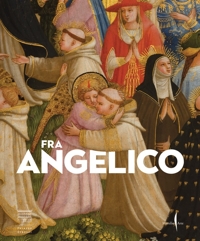
Beato Angelico
Firenze, Palazzo Strozzi, September 26, 2025 - January 25, 2026.
Edited by Carl Brandon Strehlke.
Testi di Stefano Casciu, Marco Mozzo, Angelo Tartuferi.
Venezia, 2025; hardback, pp. 440, 300 col. ill., cm 25,2x29,8.
cover price: € 80.00
|
Books included in the offer:
Beato Angelico
Firenze, Palazzo Strozzi, September 26, 2025 - January 25, 2026.
Edited by Carl Brandon Strehlke.
Testi di Stefano Casciu, Marco Mozzo, Angelo Tartuferi.
Venezia, 2025; hardback, pp. 440, 300 col. ill., cm 25,2x29,8.
FREE (cover price: € 80.00)
Marche e Toscana. Terre di grandi maestri tra Quattro e Seicento
Ospedaletto, 2007; bound, pp. 320, col. ill., col. plates, cm 25,5x29.
FREE (cover price: € 77.00)
Segni dell'Eucarestia
Edited by M. Luisa Polichetti.
Ancona, Osimo, Loreto Jesi, Senigallia, Fabriano e Metelica, 23 giugno - 31 ottobre 2011.
Torino, 2011; paperback, pp. 221, b/w and col. ill., cm 24x28.
FREE (cover price: € 32.00)
Matisse Et la Gravure. L'Autre Instrument. Matisse and Engraving. The Other Instrument
Silvana Editoriale
Edited by Deparpe P.
Le Cateau-Cambrésis (France), Musée départemental Matisse, October 2015 - March 2016.
English and French Text.
Cinisello Balsamo, 2015; paperback, pp. 256, 250 b/w and col. ill., 250 b/w and col. plates, cm 24x28.
(Arte).
series: Arte
ISBN: 88-366-3245-9 - EAN13: 9788836632459
Subject: Graphic Arts (Prints, Drawings, Engravings, Miniatures),Monographs (Painting and Drawing)
Period: 1800-1960 (XIX-XX) Modern Period
Languages: 

Weight: 1.56 kg
The Matisse Departmental Museum, with the help of the Matisse family, and notably Barbara Duthuit, and some most prestigious institutions, explores in this catalogue all of the engraving techniques used by Matisse from 1900 and up to the end of his life. For him, engraving, drawing, painting, sculpture all had the same importance, and in this work all the key themes, which led him to build his research around the human figure, are represented.
For the very first time the matrices (woodcut, lithograph, drypoint, etching, linocut...) accompany the works and help us to understand that high standards and hard work, along with an economy of means, led Matisse to transform black into a colour that he used to serve the purity of line.

Dalle Alpi Giulie al mare. Viaggio nella biodiversità. From the Julian Alps to the Adriatic

Santa Maria dell'Anima. Dinamiche Sociali e Arte di una Comunità Straniera a Roma tra '400 e '600
