




 LATEST ART BOOKS
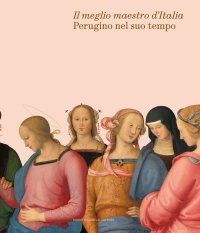
Perugino e il Suo Tempo. "Il Meglio Maestro d'Italia"
Perugia, Galleria Nazionale dell'Umbria, March 4 - June 11, 2023.
Edited by Picchiarelli V. and Pierini M.
Milano, 2023; bound, pp. 592, 650 col. ill., cm 24x21.
cover price: € 40.00
|
Books included in the offer:
Perugino e il Suo Tempo. "Il Meglio Maestro d'Italia"
Perugia, Galleria Nazionale dell'Umbria, March 4 - June 11, 2023.
Edited by Picchiarelli V. and Pierini M.
Milano, 2023; bound, pp. 592, 650 col. ill., cm 24x21.
FREE (cover price: € 40.00)
Michele Rocca e la pittura rococo a Roma
Brescia, 2004; bound in a case, pp. 310, b/w and col. ill., tavv., cm 24,5x31,5.
FREE (cover price: € 180.00)
Cucinare per gli amici
Translation by S. Mancuso.
Milano, 2012; clothbound, pp. 269, ill., cm 21x26,5.
(Gli Illustrati).
FREE (cover price: € 29.90)
Renaissance in black and white. The art of printmaking in Venice (1494-1615)
Scripta
Edited by Fara G. M. and Landau D.
English Text.
Trento, 2024; hardback, pp. 352, ill., cm 24x28.
(Studi e Ricerche).
series: Studi e Ricerche
EAN13: 9791280581877
Subject: Essays (Art or Architecture),Graphic Arts (Prints, Drawings, Engravings, Miniatures)
Period: 1400-1800 (XV-XVIII) Renaissance
Places: Venetian,Venice
Languages: 
Weight: 0 kg
This exhibition and catalogue seek to capture the essence of Veneto and Venetian Renaissance printmaking. They showcase its remarkable and groundbreaking achievements, drawing parallels with the developments in painting, as if they were mirroring each other. A visually compelling journey in which the prints' 'extremely successful black lines', as vividly described by Erasmus of Rotterdam, intricately interact with the foundational and universally recognized themes of Venetian art.
These encompass tonal chiaroscuro, expansive landscapes, vast canvases, narrative painting, the female nude, a local reinterpretation of antiquity, and a steadfast defence of the city's unyielding identity.
Through prints - objects that are immediately replicable and easily transportable, transcending geographical and linguistic boundaries - Venice revealed its profound significance within the artistic tradition of Europe as a vital crossroads of experiences in a state of perpetual and dynamic evolution.