






 LATEST ART BOOKS
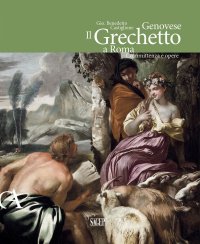
Gio. Benedetto Castiglione Genovese. Il Grechetto a Roma. Committenza e opere
Edited by Orlando Anna and Francesco Rotatori.
Genova, 2023; paperback, pp. 304, col. ill., cm 23x29.
cover price: € 150.00
|
Books included in the offer:
Gio. Benedetto Castiglione Genovese. Il Grechetto a Roma. Committenza e opere
Edited by Orlando Anna and Francesco Rotatori.
Genova, 2023; paperback, pp. 304, col. ill., cm 23x29.
FREE (cover price: € 150.00)
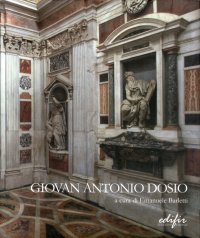
Giovan Antonio Dosio Da San Gimignano Architetto e Scultor Fiorentino tra Roma, Firenze e Napoli
Edited by Emanuele Barletti.
Photographs by BACHerin Paolo and Saverio De Meo.
Prima edizione 2011.
Firenze, 2011; bound, pp. 844, b/w and col. ill., tavv., cm 24x28,5.
FREE (cover price: € 98.00)
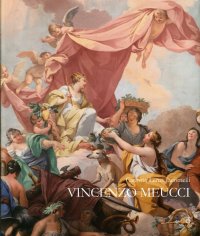
Vincenzo Meucci
Co-Editore: Cassa di Risparmio di Firenze.
Firenze, 2015; hardback, pp. 304, col. ill., cm 25x29,5.
(Arte).
FREE (cover price: € 50.00)
Gherardo Bosio. Opera Completa 1927-1941
Firenze, 2016; paperback, pp. 368, b/w and col. ill., cm 23x28.
(Architetti del Novecento. Storia e archivi).
FREE (cover price: € 60.00)

Vai, vai, Saudade
Mousse Publishing
Napoli, Museo D’arte Contemporanea Donnaregina, July 4 - November 4, 2024.
Edited by Cristiano Raimondi.
Italian and English Text.
Milano, 2026; paperback, pp. 144, ill., cm 23x30.
ISBN: 88-6749-735-9 - EAN13: 9788867497355
Subject: Collections,Painting,Sculpture
Period: 1960- Contemporary Period
Places: Out of Europe
Languages: 

Weight: 0.795 kg
The rooms on the ground floor and second floor of the Museum host 194 works-along with documents and photographs-by fifty-two Brazilian artists from various generations: Jhony Aguiar (Marabá, PA, 2001), Maxwell Alexandre (Rio de Janeiro, RJ, 1990), Sidney Amaral (São Paulo, SP, 1973-2017), Antonio Henrique Amaral (São Paulo, SP, 1973-2017), Bajado (Maraial, PE, 1912-Olinda, PE, 1996), Hércules Barsotti (São Paulo, SP, 1914-2010), Conceição dos Bugres (Provinho de Santiago, RS, 1914 - Campo Grande, MS, 1984), Amilcar de Castro(Paraisópolis, SP, 1920 - Belo Horizonte, MG, 2002), Willys de Castro (Uberlândia, MG, 1926 - São Paulo, SP, 1988), Alex Červený (São Paulo, SP, 1963), Lygia Clark (Belo Horizonte, MG,1920 - Rio de Janeiro, RJ, 1988), Antonio Dias (Campina Grande, PB, 1944 - Rio de Janeiro, RJ, 2018), Juraci Dórea (Feira De Santana, BA, 1944), Jaider Esbell (Normandia, Roraima, 1979 - São Paulo, SP, 2021), Hermelindo Fiaminghi (São Paulo, SP, 1920-2004), Davi de Jesus do Nascimento (Pirapora, MG, 1997), Eleonore Koch (Berlin, Germany, 1926 - São Paulo, SP, 2018), Lucia Koch (Porto Alegre, RS, 1966), Advânio Lessa (Lavras Novas, MG, 1981), Laura Lima (Governador Valadares, MG, 1971), Lidia Lisbôa (Guaíra, SP, 1970), Renata Lucas(Ribeirão Preto, SP, 1971), Ivens Machado (Florianópolis, SC, 1942 - Rio de Janeiro, RJ, 2015), Matheus Marques Abu (Rio de Janeiro, RJ, 1997), Maria Martins (Campanha, MG, 1894 - Rio de Janeiro, RJ, 1973), Arjan Martins (Rio de Janeiro, RJ, 1960), Ana Mazzei (São Paulo, SP,1979), Cildo Meireles (Rio de Janeiro, RJ, 1948), Hélio Melo (Vila Antimari, Boca do Acre, 1926 - Goiânia, GO, 2001), Tomie Ohtake (Kyoto, Giappone, 1913 - São Paulo, SP, 2015), Hélio Oiticica (Rio de Janeiro, RJ, 1937-1980), Opavivará! (arts collective founded in Brazil in 2005), José Pancetti (Campinas, SP, 1902 - Rio de Janeiro, RJ, 1958), Lygia Pape (Nova Friburgo, RJ, 1927 - Rio de Janeiro, RJ, 2004), Ana Prata (Sete Lagoas, MG, 1980), Heitor dos Prazeres (Rio de Janeiro, RJ, 1898-1966), Matheus Rocha Pitta (Tiradentes, MG, 1980), Gilvan Samico(Recife, PE, 1928-2013), Miguel dos Santos (Caruaru, PE, 1944), Agnaldo dos Santos (Ilha de Itaparica, BA, 1926 - Salvador, BA, 1962), Mira Schendel (Zurich, Switzerland, 1919 - São Paulo, SP, 1988), José Antônio da Silva (Sales Oliveira, SP, 1909 - São Paulo, SP, 1996), Francisco (Chico) da Silva (Alto Tejo, AC, 1910 - Fortaleza, CE, 1985), Miriam Inez da Silva(Trindade, RJ, 1937 - Rio de Janeiro, RJ, 1996), Ariano Suassuna (João Pessoa, PB, 1927 - Recife, PE, 2014), Tunga (Palmares, PE, 1952 - Rio de Janeiro, RJ, 2016), Rubem Valentim(Salvador, BA, 1922 - São Paulo, SP, 1991), Adriana Varejão (Rio de Janeiro, RJ, 1964), Alfredo Volpi (Lucca, Italy, 1896 - São Paulo, SP, 1988), Liuba Wolf (Sofia, Bulgaria, 1923 - São Paulo, SP, 2005), Niobe Xandó (Campos Novos Paulista, SP, 1915-2010), Yuli Yamagata (São Paulo, SP,1989).
Put together through sometimes unexpected associations and dialogues between different artists, "Vai, vai, Saudade" opens with an initial chapter represented by a comparison between Lygia Pape's work Livro da Arquitetura (1959-60), which describes the history of man as a builder of civilization through an inventory of architectural archetypes, and a sacred way by Acre region artist Hélio Melo, who recounts the destruction of the natural habitat by humans defined as "civilized," using poetic metaphor and allegory. The path concludes with the series Era uma vez a Amazônia by Jaider Esbell, in which the artist tells of the impoverishment of the living conditions of the original peoples of the Amazon and the uncertain future of this land inhabited for generations in harmony with the ecosystem.
From the end of slavery, only repealed in 1888, to the mass immigrations from Italy, Lebanon, Japan and Germany, to the most recent "Bolsonarism," Brazil has made its way straddling positivism and democracy, dictatorship and censorship, frustration and hope, yet without ever abandoning the resilient spirit typical of countries that have experienced a colonial history: indeed, it has exported the struggle for the rights of the original and Afro-Brazilian populations all over the world by constituting a bulwark of humanist and democratic values.
The aim of the exhibition is therefore to present Brazil as a fertile land of ideas and artistic revolutions, a country that has proved itself capable of building an identity based on the enhancement of multiculturalism and the fusion of multiple languages by defying Eurocentric visions for a one-way art history. Brazil has been among the great avant-garde players on the world stage since the beginning of the last century, and there is no avant-garde without the observation of ancestral or those cultures simplistically considered "popular."

Pietro Bellotti Detto Canaletty. Un Vedutista Veneziano nella Francia dell'Ancien Régime

Napoli Nobilissima. Rivista di arti, filologia e storia (2025). Vol. 3: Settembre-dicembre
Conte e Mattarella. Sul palcoscenico e dietro le quinte del Quirinale. Un racconto sulle istituzioni
