




 LATEST ART BOOKS
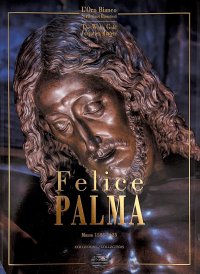
Felice Palma. Massa 1583-1625. Collezione / Collection.
Texts by Claudio Casini, Andrei Cristina, Ciarlo Nicola, Federici Fabrizio and Sara Ragni.
Italian and English Text.
Pontedera, 2024; bound in a case, pp. 289, b/w and col. ill., b/w and col. plates, cm 24,5x34.
(L'Oro Bianco. Straordinari Dimenticati. The White Gold Forgotten Masters).
cover price: € 160.00
|
Books included in the offer:
Felice Palma. Massa 1583-1625. Collezione / Collection.
Texts by Claudio Casini, Andrei Cristina, Ciarlo Nicola, Federici Fabrizio and Sara Ragni.
Italian and English Text.
Pontedera, 2024; bound in a case, pp. 289, b/w and col. ill., b/w and col. plates, cm 24,5x34.
(L'Oro Bianco. Straordinari Dimenticati. The White Gold Forgotten Masters).
FREE (cover price: € 160.00)
Le botteghe del marmo
Italian and English Text.
Ospedaletto, 1992; bound, pp. 153, 10 b/w ill., 60 col. ill., cm 24x29.
(Immagine).
FREE (cover price: € 34.49)
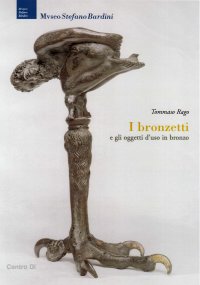
Museo Stefano Bardini. I Bronzetti e gli Oggetti d'Uso in Bronzo
Edited by Nesi A.
Firenze, 2009; paperback, pp. 191, 102 b/w ill., 7 col. ill., cm 17x24,5.
(Museo Stefano Bardini).
FREE (cover price: € 30.00)
Bronzetti e Rilievi dal XV al XVIII Secolo
Bologna, 2015; 2 vols., bound in a case, pp. 729, ill., col. plates, cm 21,5x30,5.
FREE (cover price: € 90.00)
1932-1942 Murano Glass and the Venice Biennale
Marsilio
Venezia, Le Stanze del Vetro, April 13 - November 23, 2025.
Edited by Barovier M.
English Text.
Venezia, 2025; paperback, pp. 448, col. ill., cm 24x29.
Other editions available: Edizione italiana 9791254632727
EAN13: 9791254632734
Subject: Collections,Essays (Art or Architecture),Glass
Period: 1800-1960 (XIX-XX) Modern Period,1960- Contemporary Period
Languages: 
Weight: 2.8 kg
Starting in 1932, Murano glass was showcased at the Biennale in a space specifically created for the decorative arts, an initiative led by the Istituto Veneto per il Lavoro. This official recognition highlighted the quality and prestige of the so-called minor arts, with works carefully selected to be presented to the public.
With the Biennale's continuous renewal, Murano glassmakers had the opportunity to present the finest examples of their production, drawing inspiration from a context rich in artistic energy and international influence. The Biennale served not only as a privileged showcase but also as an occasion for dialogue and exchange within the artistic glass community.
Among the standout glassmakers were Venini, which collaborated with Carlo Scarpa, and Barovier Seguso Ferro (later Seguso Vetri d'Arte), featuring Flavio Poli. Dino Martens, on the other hand, worked first with Salviati and Successori Rioda and later with Aureliano Toso. Other prominent names of the time included AVEM, the historic Barovier furnace, Cirillo Maschio, Ulderico Moretti, S.A.I.A.R. Ferro Toso, Fratelli Toso, VAMSA, and S.A.L.I.R., all showcasing the exceptional potential of Murano glass.
The exhibition 1932-1942: Murano Glass and the Venice Biennale, accompanied by a catalog curated by Marino Barovier and Carla Sonego, presents a selection of objects displayed during those editions, enriched by period documents and archival materials