




 LATEST ART BOOKS
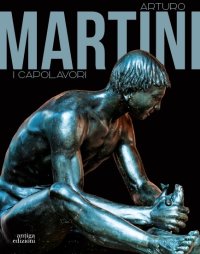
Arturo Martini. I capolavori
Treviso, Museo “luigi Bailo”, March 31 - July 30, 2023.
Edited by Stringa Nico and Fabrizio Malachin.
Cornuda, 2023; paperback, pp. 278, col. ill., cm 23x29.
cover price: € 33.00
|
Books included in the offer:
Arturo Martini. I capolavori
Treviso, Museo “luigi Bailo”, March 31 - July 30, 2023.
Edited by Stringa Nico and Fabrizio Malachin.
Cornuda, 2023; paperback, pp. 278, col. ill., cm 23x29.
FREE (cover price: € 33.00)
Studi su Arturo Martini. Per Ofelia
Edited by Matteo Ceriana and Claudia Gian Ferrari.
Milano, Atti del Covegno, 19 maggio 2008.
Milano, 2009; paperback, pp. 136, 97 b/w ill., cm 17x24.
FREE (cover price: € 29.00)

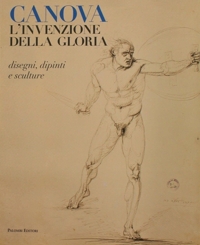
Canova. L'invenzione della gloria. Disegni, dipinti e sculture.
Genova, Palazzo Reale, April 16 - July 24, 2016.
Edited by Giuliana Ericani and Franceasco Leone.
Roma, 2016; paperback, pp. 306, col. ill., col. plates, cm 23x30.
FREE (cover price: € 35.00)
Thomas Schütte. Genealogies
Marsilio
Venice, Punta della Dogana, April 6 - November 23, 2025.
Edited by Morineau C. and Gallais J.
Edited with text by Jean-Marie Gallais, Camille Morineau.
Text by Antonia Boström, Emma Lavigne.
Venezia, 2025; bound, pp. 304, 150 col. ill., cm 22x28.
EAN13: 9791254632673
Subject: Essays (Art or Architecture),Monographs (Sculpture and Decorative Arts),Sculpture
Period: 1960- Contemporary Period
Languages: 
Weight: 1.37 kg
Unclassifiable and protean, German artist Thomas Schütte's (born 1954) work takes an uneasy, ironic look at the human condition. Genealogies explores the circulation of motifs-mainly the human face-in Schütte's works, transposed from one medium to another. Caricatured, sometimes abused and always in motion, Schütte's anthropomorphic figures and busts come to life in clay, wax, ceramics, glass, steel or bronze, all anchored in his preparatory drawings and portrait sketches. This catalog analyzes the artist's relationship between paper and sculpture, the historical iconography of his signature faces and his creative process. Many of the drawings and watercolors presented here have never been published before, giving the reader access to a more intimate facet of Schütte's work