




 LATEST ART BOOKS
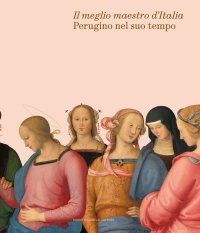
Perugino e il Suo Tempo. "Il Meglio Maestro d'Italia"
Perugia, Galleria Nazionale dell'Umbria, March 4 - June 11, 2023.
Edited by Picchiarelli V. and Pierini M.
Milano, 2023; bound, pp. 592, 650 col. ill., cm 24x21.
cover price: € 40.00
|
Books included in the offer:
Perugino e il Suo Tempo. "Il Meglio Maestro d'Italia"
Perugia, Galleria Nazionale dell'Umbria, March 4 - June 11, 2023.
Edited by Picchiarelli V. and Pierini M.
Milano, 2023; bound, pp. 592, 650 col. ill., cm 24x21.
FREE (cover price: € 40.00)
Michele Rocca e la pittura rococo a Roma
Brescia, 2004; bound in a case, pp. 310, b/w and col. ill., tavv., cm 24,5x31,5.
FREE (cover price: € 180.00)
Cucinare per gli amici
Translation by S. Mancuso.
Milano, 2012; clothbound, pp. 269, ill., cm 21x26,5.
(Gli Illustrati).
FREE (cover price: € 29.90)
Julie Mehretu. Ensemble
Marsilio
Venezia, Punta della Dogana, March 17, 2024 - January 6, 2025.
Edited by Bourgeois C.
Venezia, 2024; paperback, pp. 304, col. ill., cm 17x24.
EAN13: 9791254631751
Subject: Collections,Essays (Art or Architecture),Monographs (Painting and Drawing),Painting
Period: 1960- Contemporary Period
Languages: 
Weight: 1.324 kg
The palimpsest of her work, forming multiple surfaces images, echoes with the collective dimension, the idea of working together, which we have sought to bring out here. In this exhibition, pieces by Mehretu's friends Nairy Baghramian, Huma Bhabha, Tacita Dean, David Hammons, Robin Coste Lewis, Paul Pfeiffer and Jessica Rankin enter into a rich dialogue with her own art. Beyond their formal differences, common concerns and shared driving forces become apparent, challenging the idea that the artist is self-sufficient and showing that, on the contrary, she is connected to others, to their thoughts and sensibilities. Their works inspire her and resonate with her own, with her way of looking at the world-all the more since each of these artists, like Julie Mehretu herself, experienced displacements that deeply shaped who they became, by force or by choice, leaving or fleeing Ethiopia, Iran, Pakistan. Their participation in the exhibition is a testament to Julie Mehretu's acute attention to these gradually woven relationships, to their seminal role and creative power.