




 LATEST ART BOOKS
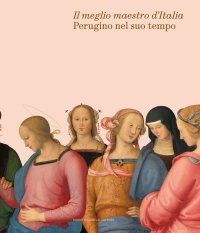
Perugino e il Suo Tempo. "Il Meglio Maestro d'Italia"
Perugia, Galleria Nazionale dell'Umbria, March 4 - June 11, 2023.
Edited by Picchiarelli V. and Pierini M.
Milano, 2023; bound, pp. 592, 650 col. ill., cm 24x21.
cover price: € 40.00
|
Books included in the offer:
Perugino e il Suo Tempo. "Il Meglio Maestro d'Italia"
Perugia, Galleria Nazionale dell'Umbria, March 4 - June 11, 2023.
Edited by Picchiarelli V. and Pierini M.
Milano, 2023; bound, pp. 592, 650 col. ill., cm 24x21.
FREE (cover price: € 40.00)
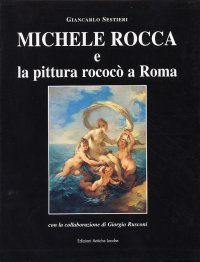
Michele Rocca e la pittura rococo a Roma
Brescia, 2004; bound in a case, pp. 310, b/w and col. ill., tavv., cm 24,5x31,5.
FREE (cover price: € 180.00)
Cucinare per gli amici
Translation by S. Mancuso.
Milano, 2012; clothbound, pp. 269, ill., cm 21x26,5.
(Gli Illustrati).
FREE (cover price: € 29.90)
Guido Reni and Rome. Nature and devotion
Marsilio
Roma, Galleria Borghese, March 1 - May 22, 2022.
Edited by Cappelletti F.
Venezia, 2022; paperback, pp. 272, col. ill., cm 20,5x25,5.
Other editions available: Edizione italiana 9791254630297
EAN13: 9791254630464
Subject: Monographs (Painting and Drawing),Painting
Period: 1400-1800 (XV-XVIII) Renaissance
Languages: 
Weight: 1.097 kg
"What infused virtue? These gifts are acquired with unceasing study and stubborn effort; they are not found by chance, nor are they inherited as one sleeps[...]. I have studied more than anyone else has ever done, denying myself the nightly and necessary rest to the point of exhaustion."
With this quotation from Carlo Cesare Malvasia, Francesca Cappelletti, editor of the book and curator of the exhibition, introduces her reflection on Guido Reni and the much celebrated 'perfection' of his works. According to Cappelletti, Malvasia's text, as well as Vincenzo Giustiniani's Discorso sopra la pittura, are both fundamental for "reflecting on Guido Reni's development in Rome and for adding details to some aspects of his activity in the Pope's city". A further element that invites us to reconsider the artist's Roman sojourn and his landscape painting is the return to the Galleria Borghese of a painting called Country Dance, formerly in the possession of Cardinal Scipione Borghese, but which was subsequently considered lost; it re-emerged recently and was purchased by the Italian State in 2020. The painting has brought to light a little-known aspect of Reni's production, although several of his works and drawings show a certain interest in painting 'from nature'. The country scenes of Niccolò dell'Abate and Agostino and Annibale Carracci, along with the landscapes of Domenichino, Giovanni Battista Viola and an early Flemish artist working in the Italian manner - Paul Bril, who had settled in Rome in the late sixteenth century - are the benchmarks for this new vision of nature, which blended science and poetry and was cultivated between Bologna and Rome in the early seventeenth century. It was in Rome, a city that was then a testing ground and a challenge for artists, that the young Guido Reni came up against the powerful, rapid and dramatic manner of Caravaggio. The story of the relationship between Guido Reni and his contemporaries, and between landscape and figural painting, ends with the events leading up to the creation of Aurora, a fresco painted between 1613 and 1614 for Cardinal Scipione Borghese's rural retreat. However, the presence of some masterpieces from later years gives a glimpse of the importance and persistence of the impressions gained during his stay in Rome.
In addition to essays by the curator and contributions by Daniele Benati, Anna Coliva, Francesco Gatta, Raffaella Morselli and Maria Cristina Terzaghi, the volume also includes texts about the individual works by Daniele Benati, Lucia Calzona, Mirella Cavalli, Romeo Pio Cristofori, Francesco Gatta, Sergio Guarino, Antonio Iommelli, Rafael Japón, Letizia Lodi, Pier Ludovico Puddu, Alessandra Rodolfo, Lara Scanu and Emanuela Settimi. Finally, the appendix edited by Romeo Pio Cristofori and Lara Scanu presents items documenting the painter's presence in Rome in accounts and collections.