






 LATEST ART BOOKS
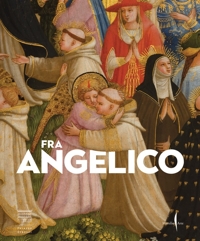
Beato Angelico
Firenze, Palazzo Strozzi, September 26, 2025 - January 25, 2026.
Edited by Carl Brandon Strehlke.
Testi di Stefano Casciu, Marco Mozzo, Angelo Tartuferi.
Venezia, 2025; hardback, pp. 440, 300 col. ill., cm 25,2x29,8.
cover price: € 80.00
|
Books included in the offer:
Beato Angelico
Firenze, Palazzo Strozzi, September 26, 2025 - January 25, 2026.
Edited by Carl Brandon Strehlke.
Testi di Stefano Casciu, Marco Mozzo, Angelo Tartuferi.
Venezia, 2025; hardback, pp. 440, 300 col. ill., cm 25,2x29,8.
FREE (cover price: € 80.00)
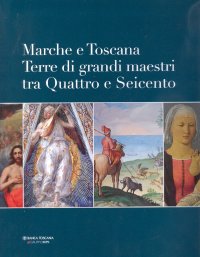
Marche e Toscana. Terre di grandi maestri tra Quattro e Seicento
Ospedaletto, 2007; bound, pp. 320, col. ill., col. plates, cm 25,5x29.
FREE (cover price: € 77.00)
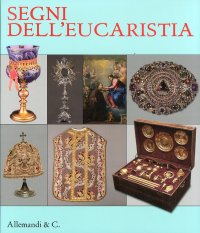
Segni dell'Eucarestia
Edited by M. Luisa Polichetti.
Ancona, Osimo, Loreto Jesi, Senigallia, Fabriano e Metelica, 23 giugno - 31 ottobre 2011.
Torino, 2011; paperback, pp. 221, b/w and col. ill., cm 24x28.
FREE (cover price: € 32.00)
Michelangelo Pistoletto
Maretti Editore
Edited by Continua Galleria.
English and Spanish Text.
Falciano, 2017; hardback, pp. 192, col. ill., col. plates, cm 17x22.
ISBN: 88-98855-40-0 - EAN13: 9788898855407
Subject: Collections,Essays (Art or Architecture),Monographs (Sculpture and Decorative Arts),Sculpture
Period: 1960- Contemporary Period
Languages: 

Weight: 0.63 kg
Systematising a logic associated with movements and their possible denominations is perhaps one of the limitations of 20th-century art historiography: it has not yet been possible to think about this period in its entire dimension and complexity. We cannot possibly make reference to this intricacy from knowledge of facts alone, without sketching the importance of gender and racial origin, and without the interferences of situations associated with interdisciplinarity.
Questions which would be impossible to analyse without taking into account the dimension of those artists who transcend their time and acquire a status of atemporality.
Michelangelo Pistoletto is beyond Arte Povera, Pop or Nouveau Réalisme, his work is the struggle through the different years of his life and is like the minor residues of a great laboratory which has surpassed the art object in order to enter into the epicentre of society. His interest in artistic creation stems from cohabiting from early childhood with a father whose profession was restoring works of art. There he observed pieces of great value and religious images belonging to an iconography which had its origins in the Middle Ages. This cohabitation, combined with the beginning of his education in Catholic schools, made him reflect on the relations between art and religion; an enquiry that reached its maturity of thought in 1978 when he conceived the show titled Division and Multiplication of the Mirror - Art Takes On Religion.
El arte no puede verse como un suceso sujeto a cronologías y a movimientos específicos. Sistematizar una lógica asociada a movimientos y a sus posibles denominaciones es quizás una de las limitaciones de la historiografía del arte del siglo XX; todavía no se ha podido pensar este período de tiempo en toda su dimensión y complejidad. Es imposible remitirnos a este entramado solo desde la hechología, sin esbozar la importancia del género, la racialidad y sin las interferencias de situaciones asociadas a la interdisciplinariedad. Cuestiones que serían imposibles de analizar sin tomar en cuenta la dimensión de aquellos artistas que trascienden una época y adquieren un estatus de atemporalidad.
Michelangelo Pistoletto está más allá del Arte Povera, el Pop o el Nuevo Realismo, su obra es el bregar a través de los diferentes años de su vida y queda como los pequeños residuos de un gran laboratorio que ha superado el objeto artístico para entrar en el epicentro de la sociedad. Su interés por la creación viene de haber convivido desde pequeño con un padre que se dedicaba a la restauración de obras de arte. Allí observó piezas de gran valor e imágenes religiosas pertenecientes a una iconografía que tenía sus orígenes en la edad media. Esta convivencia, unida al inicio de su educación en escuelas católicas, lo hizo reflexionar sobre las relaciones entre el arte y la religión; un cuestionamiento que alcanza su madurez de pensamiento en el año 1978 cuando organiza la muestra titulada Divisione y moltiplicazione dello specchio. L'arte assume la religione.

Dalle Alpi Giulie al mare. Viaggio nella biodiversità. From the Julian Alps to the Adriatic

Santa Maria dell'Anima. Dinamiche Sociali e Arte di una Comunità Straniera a Roma tra '400 e '600
