






 LATEST ART BOOKS
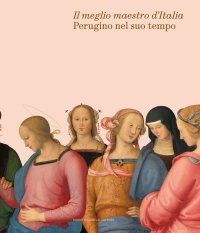
Perugino e il Suo Tempo. "Il Meglio Maestro d'Italia"
Perugia, Galleria Nazionale dell'Umbria, March 4 - June 11, 2023.
Edited by Picchiarelli V. and Pierini M.
Milano, 2023; bound, pp. 592, 650 col. ill., cm 24x21.
cover price: € 40.00
|
Books included in the offer:
Perugino e il Suo Tempo. "Il Meglio Maestro d'Italia"
Perugia, Galleria Nazionale dell'Umbria, March 4 - June 11, 2023.
Edited by Picchiarelli V. and Pierini M.
Milano, 2023; bound, pp. 592, 650 col. ill., cm 24x21.
FREE (cover price: € 40.00)
Michele Rocca e la pittura rococo a Roma
Brescia, 2004; bound in a case, pp. 310, b/w and col. ill., tavv., cm 24,5x31,5.
FREE (cover price: € 180.00)
Cucinare per gli amici
Translation by S. Mancuso.
Milano, 2012; clothbound, pp. 269, ill., cm 21x26,5.
(Gli Illustrati).
FREE (cover price: € 29.90)
Textile Gifts in the Middle Ages. Objects, Actors, and Representations
Campisano Editore
Italian, English and German Text.
Roma, 2022; paperback, pp. 208, ill., cm 16x24.
(Quaderni della Bibliotheca Hertziana. 8).
series: Quaderni della Bibliotheca Hertziana
ISBN: 88-85795-86-2 - EAN13: 9788885795860
Subject: Essays (Art or Architecture),Restoration and Preservation
Languages: 


Weight: 1 kg
They could be offered in the course of an initiation rite and or an act of social transition, including upon investiture, marriage, or entry into a monastery. Gifts of clothing to the poor, meanwhile, were among the works of charity thematized in the vitae of numerous medieval saints. Sumptuous textiles were sent as resplendent gifts to religious institutions or circulated through diplomatic gift exchanges. Gifts of clothing were distributed within the court as remuneration (in kind) and served to structure and hierarchize court society. Textile gifts could also represent the donor. Especially in the case of clothing previously worn by its donor, the materiality and form of the gifted garment might have been imbued with the physical presence of the giver. This volume aims to situate the diversity and polysemy of such acts of symbolic communication within the broader context of medieval gift giving. Integrating anthropological and sociological models into an art historical approach allows gifted artifacts to be taken seriously as independent entities within the giving process as a socially generative form of communication. With its focus on images and objects, art history is poised to show how the dynamics of reciprocity and its attendant obligations might have been charged both visually and materially. In turn, the relationships between the actors and the "agency" of gifts themselves take on sharper contours

Pietro Bellotti Detto Canaletty. Un Vedutista Veneziano nella Francia dell'Ancien Régime
In Re: la stampa della libertà. Leopere di Guem Muk Lee e i disegni di guerra di Giovanni Rubino
Gigante 2027. Catalogo nazionale delle monete italiane dal '700 alla fine della lira
Il libro della magia cerimoniale. La tradizione segreta nella Goetia

Conte e Mattarella. Sul palcoscenico e dietro le quinte del Quirinale. Un racconto sulle istituzioni
