






 LATEST ART BOOKS
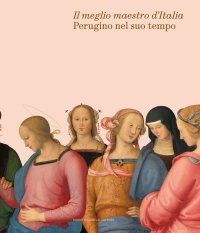
Perugino e il Suo Tempo. "Il Meglio Maestro d'Italia"
Perugia, Galleria Nazionale dell'Umbria, March 4 - June 11, 2023.
Edited by Picchiarelli V. and Pierini M.
Milano, 2023; bound, pp. 592, 650 col. ill., cm 24x21.
cover price: € 40.00
|
Books included in the offer:
Perugino e il Suo Tempo. "Il Meglio Maestro d'Italia"
Perugia, Galleria Nazionale dell'Umbria, March 4 - June 11, 2023.
Edited by Picchiarelli V. and Pierini M.
Milano, 2023; bound, pp. 592, 650 col. ill., cm 24x21.
FREE (cover price: € 40.00)
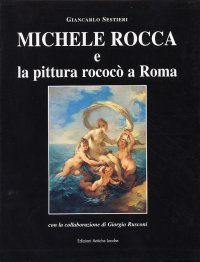
Michele Rocca e la pittura rococo a Roma
Brescia, 2004; bound in a case, pp. 310, b/w and col. ill., tavv., cm 24,5x31,5.
FREE (cover price: € 180.00)
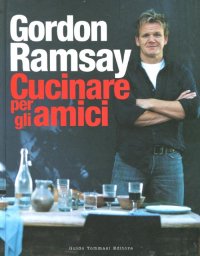
Cucinare per gli amici
Translation by S. Mancuso.
Milano, 2012; clothbound, pp. 269, ill., cm 21x26,5.
(Gli Illustrati).
FREE (cover price: € 29.90)
Visual typology in Early Modern Europe. Continuity and expansion.
Brepols Publishers
Edited by D. Eichberger and S. Perlove.
English Text.
Turnhout, 2018; bound, pp. 292, col. ill., cm 17,5x25,5.
ISBN: 2-503-54550-5 - EAN13: 9782503545509
Subject: Essays (Art or Architecture)
Languages: 
Weight: 0.41 kg
Typological thinking informs traditional pre-figurations, as well as more broadly associative interconnections between the Old Testament, classical texts, and even natural history, in relation to the New Testament. Typological thought permeates religious and secular visual culture during the period under consideration and this collection of essays reveals the continuing relevance and expansion of typological patterns for the visual arts, with particular emphasis on innovations in the sixteenth century. In the course of the sixteenth century typology became more complex and flexible, and came under the influence of the writings of Protestant and Catholic reformers, and also derived new secular and political analogies.
Each essay offers a different interpretation of typological thinking. The typological manuals that were written in the course of the Late Middle Ages remain the basis for many artistic projects in illuminated manuscripts, stained glass windows, sculpture, and painting. By the sixteenth century, the notion of type and antitype was so well embedded in thought that artists such as Brueghel and Lucas van Leyden implicitly evoked typological relationships. Before the Council of Trent, more allusive interpretations led to unorthodox pairings of images from secular and religious contexts. In the first half of the sixteenth century new relationships were developed by Protestant commentators. After the Council of Trent the Catholic Church returned to more traditional typological forms and established new guidelines for reading devotional images. Nonetheless, artists continued to pursue unorthodox, innovative pairings.

Pietro Bellotti Detto Canaletty. Un Vedutista Veneziano nella Francia dell'Ancien Régime
Officina Zanon 1946-2026. 80 anni di sapere artigiano-80 Years of craft knowledge. Ediz. bilingue

Conte e Mattarella. Sul palcoscenico e dietro le quinte del Quirinale. Un racconto sulle istituzioni
