






 LATEST ART BOOKS
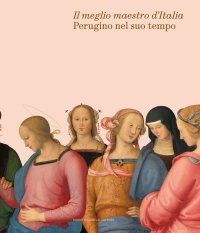
Perugino e il Suo Tempo. "Il Meglio Maestro d'Italia"
Perugia, Galleria Nazionale dell'Umbria, March 4 - June 11, 2023.
Edited by Picchiarelli V. and Pierini M.
Milano, 2023; bound, pp. 592, 650 col. ill., cm 24x21.
cover price: € 40.00
|
Books included in the offer:
Perugino e il Suo Tempo. "Il Meglio Maestro d'Italia"
Perugia, Galleria Nazionale dell'Umbria, March 4 - June 11, 2023.
Edited by Picchiarelli V. and Pierini M.
Milano, 2023; bound, pp. 592, 650 col. ill., cm 24x21.
FREE (cover price: € 40.00)
Michele Rocca e la pittura rococo a Roma
Brescia, 2004; bound in a case, pp. 310, b/w and col. ill., tavv., cm 24,5x31,5.
FREE (cover price: € 180.00)
Cucinare per gli amici
Translation by S. Mancuso.
Milano, 2012; clothbound, pp. 269, ill., cm 21x26,5.
(Gli Illustrati).
FREE (cover price: € 29.90)
Icons in Time, Persons in Eternity. Orthodox Theology and the Aesthetics of the Christian Image
Tsakiridou Cornelia A.
Ashgate Publishing Limited
Aldershot, 2013; hardback, pp. 350, ill., cm 17x24.
ISBN: 1-4094-4767-7 - EAN13: 9781409447672
Subject: Painting
Languages: 
Weight: 1.11 kg
Drawing on classical Greek art criticism, Byzantine ekphraseis and hymnography, and the theologies of St. Maximus the Confessor, St. Symeon the New Theologian and St. Gregory Palamas, the author argues that the ancient Greek concept of enargeia best conveys the expression of theophany and theosis in art. The qualities that define enargeia - inherent liveliness, expressive autonomy and self-subsisting form - are identified in exemplary Greek and Russian icons and considered in the context of the hesychastic theology that lies at the heart of Orthodox Christianity.
An Orthodox aesthetics is thus outlined that recognizes the transcendent being of art and is open to dialogue with diverse pictorial and iconographic traditions. An examination of Ch'an (Zen) art theory and a comparison of icons with paintings by Wassily Kandinsky, Pablo Picasso, Mark Rothko and Marc Chagall, and by Japanese artists influenced by Zen Buddhism, reveal intriguing points of convergence and difference. The reader will find in these pages reasons to reconcile Modernism with the Christian image and Orthodox tradition with creative form in art.

Pietro Bellotti Detto Canaletty. Un Vedutista Veneziano nella Francia dell'Ancien Régime
Il poliedrico SID in B/N. Nella pittura, nella scultura, nella grafica e nella street art
Building in Africa. Cape to Cairo in 150 days: experiences of an engineer

Gigante 2027. Catalogo nazionale delle monete italiane dal '700 alla fine della lira
Il libro della magia cerimoniale. La tradizione segreta nella Goetia
Conte e Mattarella. Sul palcoscenico e dietro le quinte del Quirinale. Un racconto sulle istituzioni
