




 LATEST ART BOOKS
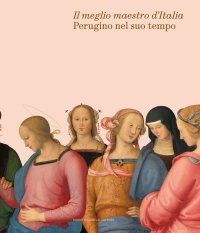
Perugino e il Suo Tempo. "Il Meglio Maestro d'Italia"
Perugia, Galleria Nazionale dell'Umbria, March 4 - June 11, 2023.
Edited by Picchiarelli V. and Pierini M.
Milano, 2023; bound, pp. 592, 650 col. ill., cm 24x21.
cover price: € 40.00
|
Books included in the offer:
Perugino e il Suo Tempo. "Il Meglio Maestro d'Italia"
Perugia, Galleria Nazionale dell'Umbria, March 4 - June 11, 2023.
Edited by Picchiarelli V. and Pierini M.
Milano, 2023; bound, pp. 592, 650 col. ill., cm 24x21.
FREE (cover price: € 40.00)
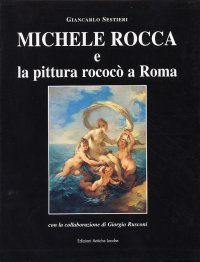
Michele Rocca e la pittura rococo a Roma
Brescia, 2004; bound in a case, pp. 310, b/w and col. ill., tavv., cm 24,5x31,5.
FREE (cover price: € 180.00)
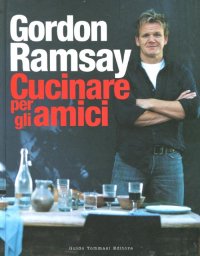
Cucinare per gli amici
Translation by S. Mancuso.
Milano, 2012; clothbound, pp. 269, ill., cm 21x26,5.
(Gli Illustrati).
FREE (cover price: € 29.90)
Tomás Sánchez
Sullivan Edward J.
Skira
Edited by Gribaudo P.
Second Edition also Available. first edition (2002).
English Text.
Milano, 2003; bound, pp. 224, 180 col. ill., cm 30x30.
(Arte Moderna).
series: Arte Moderna
Other editions available: Spanish Edition (ISBN: 88-8491-397-7).
ISBN: 88-8491-396-9 - EAN13: 9788884913968
Subject: Essays (Art or Architecture),Monographs (Painting and Drawing)
Period: 1800-1960 (XIX-XX) Modern Period,1960- Contemporary Period
Places: No Place
Extra: Iberic Art and Culture
Languages: 
Weight: 2.25 kg
Sánchez is a commanding realist, although his landscapes are imagined or dreamed. His work is meticulous in its breathtaking detail, but the objective of the artist is not so much the recreation of reality as it is displaying the magnificence of a lyrical universe. In this respect, Sánchez is closer to his compatriot, the author Alejo Carpentier, or perhaps to the Nobel laureate Gabriel García Márguez, in their insistence on the magical realism of Latin American existence, than he is to the North American model of hyperrealism.
Tomás Sánchez is a creator of deeply spiritual images of nature; his various scenes of lush vegetation create an ambience of profound peace, achieving a transcendent, meditative state that radiates spirituality. His paintings may, on one level, represents metaphors for a paradise long-lost to humanity. On another plane, they may be analyzed as allegories of the Cuban landscape-dreams of a place which may never be re-captured, even in memory. Like all great landscape paintings of the past, the view of nature by Sánchez communicates respect and a connection with the forces of the earth.
Richly illustrated, this volume follows the development of Sánchez's work from the first expressionist paintings to the latest landscapes of 2002. The book includes an essay by Gabriel García Márquez and a text and an interview by Edward J. Sullivan, Professor and Chairman of the Department of Fine Arts, New York University.