






 LATEST ART BOOKS
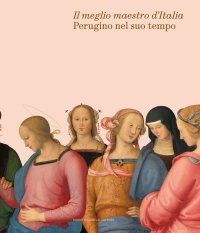
Perugino e il Suo Tempo. "Il Meglio Maestro d'Italia"
Perugia, Galleria Nazionale dell'Umbria, March 4 - June 11, 2023.
Edited by Picchiarelli V. and Pierini M.
Milano, 2023; bound, pp. 592, 650 col. ill., cm 24x21.
cover price: € 40.00
|
Books included in the offer:
Perugino e il Suo Tempo. "Il Meglio Maestro d'Italia"
Perugia, Galleria Nazionale dell'Umbria, March 4 - June 11, 2023.
Edited by Picchiarelli V. and Pierini M.
Milano, 2023; bound, pp. 592, 650 col. ill., cm 24x21.
FREE (cover price: € 40.00)
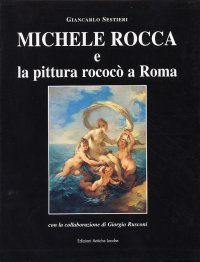
Michele Rocca e la pittura rococo a Roma
Brescia, 2004; bound in a case, pp. 310, b/w and col. ill., tavv., cm 24,5x31,5.
FREE (cover price: € 180.00)
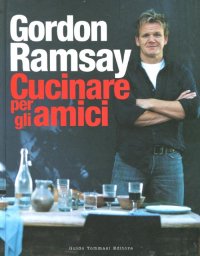
Cucinare per gli amici
Translation by S. Mancuso.
Milano, 2012; clothbound, pp. 269, ill., cm 21x26,5.
(Gli Illustrati).
FREE (cover price: € 29.90)
The Religious Paintings of Hendrick ter Brugghen. Reinventing Christian Painting after the Reformation in Utrecht
Seaman Natasha T.
Ashgate Publishing Limited
English Text.
Aldershot, 2012; hardback, pp. 200, 69 b/w and col. ill., cm 17x24.
ISBN: 1-4094-3495-8 - EAN13: 9781409434955
Subject: Monographs (Painting and Drawing)
Period: 1400-1800 (XV-XVIII) Renaissance
Places: Europe
Extra: Flamish, German Art
Languages: 
Weight: 0.68 kg
Focusing on the Dutch master's simultaneous use of Northern archaisms with Caravaggio's motifs and style, Natasha Seaman nuances our understanding of Ter Brugghen's appropriations from the Italian painter. Her analysis centers on four paintings, all depicting New Testament subjects. They include Ter Brugghen's largest and first known signed work (Crowning with Thorns), his most archaizing (the Crucifixion), and the two paintings most directly related to the works of Caravaggio (the Doubting Thomas and the Calling of Matthew).
By examining the ways in which Ter Brugghen's paintings deliberately diverge from Caravaggio's, Seaman sheds new light on the Utrecht artist and his work. For example, she demonstrates that where Caravaggio's paintings are boldly illusionistic and mimetic, thus de-emphasizing their materiality, Ter Brugghen's works examined here create the opposite effect, connecting their content to their made form.
This study not only illuminates the complex meanings of the paintings addressed here, but also offers insights into the image debates and the status of devotional art in Italy and Utrecht in the seventeenth century by examining one artist's response to them.

Pietro Bellotti Detto Canaletty. Un Vedutista Veneziano nella Francia dell'Ancien Régime
Officina Zanon 1946-2026. 80 anni di sapere artigiano-80 Years of craft knowledge. Ediz. bilingue

Conte e Mattarella. Sul palcoscenico e dietro le quinte del Quirinale. Un racconto sulle istituzioni
