




 LATEST ART BOOKS
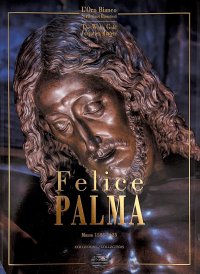
Felice Palma. Massa 1583-1625. Collezione / Collection.
Texts by Claudio Casini, Andrei Cristina, Ciarlo Nicola, Federici Fabrizio and Sara Ragni.
Italian and English Text.
Pontedera, 2024; bound in a case, pp. 289, b/w and col. ill., b/w and col. plates, cm 24,5x34.
(L'Oro Bianco. Straordinari Dimenticati. The White Gold Forgotten Masters).
cover price: € 160.00
|
Books included in the offer:
Felice Palma. Massa 1583-1625. Collezione / Collection.
Texts by Claudio Casini, Andrei Cristina, Ciarlo Nicola, Federici Fabrizio and Sara Ragni.
Italian and English Text.
Pontedera, 2024; bound in a case, pp. 289, b/w and col. ill., b/w and col. plates, cm 24,5x34.
(L'Oro Bianco. Straordinari Dimenticati. The White Gold Forgotten Masters).
FREE (cover price: € 160.00)
Le botteghe del marmo
Italian and English Text.
Ospedaletto, 1992; bound, pp. 153, 10 b/w ill., 60 col. ill., cm 24x29.
(Immagine).
FREE (cover price: € 34.49)
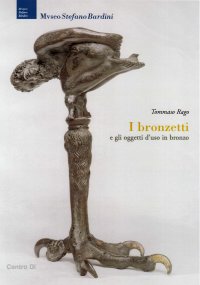
Museo Stefano Bardini. I Bronzetti e gli Oggetti d'Uso in Bronzo
Edited by Nesi A.
Firenze, 2009; paperback, pp. 191, 102 b/w ill., 7 col. ill., cm 17x24,5.
(Museo Stefano Bardini).
FREE (cover price: € 30.00)
Bronzetti e Rilievi dal XV al XVIII Secolo
Bologna, 2015; 2 vols., bound in a case, pp. 729, ill., col. plates, cm 21,5x30,5.
FREE (cover price: € 90.00)

Seismic Modernism. Architecture and Housing in Soviet Tashke
Philipp Meuser
DOM Publishers
English Text.
Berlin, 2016; paperback, pp. 256, 300 col. ill., cm 21,5x23.
ISBN: 3-86922-493-2 - EAN13: 9783869224930
Subject: Architects and their Practices,Civil Architecture/Art
Period: 1800-1960 (XIX-XX) Modern Period
Places: Out of Europe
Languages: 
Weight: 0.5 kg
In the publication Seismic Modernism by Philipp Meuser, the reconstruction efforts which triggered an astonishing wave of innovation and forced through the modernisation of the city are pivotal. Although the industrialisation of Tashkent and thus the immigration of workers was already in full swing earlier, meaning that a few serial residential buildings already existed (there were already several local house-building factories) this urban trend was intensified. Urban planners could now implement on a large scale their remodelling plans for the roughly 300,000 homeless people. Twenty different design institutes and building collectives from across the USSR contributed to the reconstruction effort. The architects integrated regional construction traditions into their modern socialist designs - an unprecedented phenomenon which is illustrated most clearly on the facade mosaics by the Zharsky brothers. Therefore, the southernmost million-strong metropolis of the Soviet Union occupies a special place in Soviet prefabricated construction owing to the quantity, diversity and ornamentation evident therein. The reconstruction of Tashkent is a prime example of Soviet ideals in urban planning, whereby technical standardisation and the taking into account of social needs complement one another. Today, this makes the subject more topical than ever before.
Philipp Meuser, expert on serial housing construction in the Soviet Union who is already the author of numerous publications on the subject and who advocates an appraisal and reassessment of prefabricated construction, traces the history of the modern urban development of Tashkent from preceding events and the beginning of serial housing construction in 1956 to the construction boom following the earthquake until the dissolution of the Soviet Union in 1991.