






 LATEST ART BOOKS
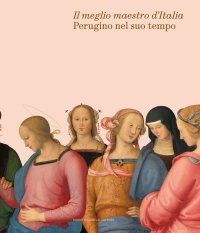
Perugino e il Suo Tempo. "Il Meglio Maestro d'Italia"
Perugia, Galleria Nazionale dell'Umbria, March 4 - June 11, 2023.
Edited by Picchiarelli V. and Pierini M.
Milano, 2023; bound, pp. 592, 650 col. ill., cm 24x21.
cover price: € 40.00
|
Books included in the offer:
Perugino e il Suo Tempo. "Il Meglio Maestro d'Italia"
Perugia, Galleria Nazionale dell'Umbria, March 4 - June 11, 2023.
Edited by Picchiarelli V. and Pierini M.
Milano, 2023; bound, pp. 592, 650 col. ill., cm 24x21.
FREE (cover price: € 40.00)
Michele Rocca e la pittura rococo a Roma
Brescia, 2004; bound in a case, pp. 310, b/w and col. ill., tavv., cm 24,5x31,5.
FREE (cover price: € 180.00)
Cucinare per gli amici
Translation by S. Mancuso.
Milano, 2012; clothbound, pp. 269, ill., cm 21x26,5.
(Gli Illustrati).
FREE (cover price: € 29.90)
Naked Architecture
Mosco Valerio Paolo
Skira
English Text.
Milano, 2012; paperback, pp. 320, 340 col. ill., 340 col. plates, cm 16,5x21.
ISBN: 88-572-0472-3 - EAN13: 9788857204727
Subject: Architects and their Practices
Languages: 
Weight: 0.9 kg
Over the last ten years architecture would seem to have rediscovered engineering.
Now that the Postmodern period, in which the structure of buildings was camouflaged by coverings of every kind, has passed, architecture today seems to have undressed, almost as though wishing to show how it is made (and to render this spectacular).
On the other hand, the rediscovery in recent years of plastic form has brought about a closer relationship between architects and engineers. In the wake of the phenomenon that is the work of Santiago Calatrava, figures of engineer-architects have emerged such as Cecil Balmond, Sasaki and Guy Nordenson, who have been able to give a strongly "engineering-oriented" guise to ever more complex building sites.
To this we must add the rise of new issues, such as that of environmental engineering, which has changed from being a specifically technical sphere to one of many other realms of knowledge, not least the aesthetic.
If, therefore, there is a phenomenon today that is able to hold together the various expressions of contemporary architecture, it is precisely this return to the structure and methods with which it is realized


Santa Maria dell'Anima. Dinamiche Sociali e Arte di una Comunità Straniera a Roma tra '400 e '600
