






 LATEST ART BOOKS
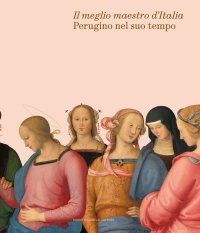
Perugino e il Suo Tempo. "Il Meglio Maestro d'Italia"
Perugia, Galleria Nazionale dell'Umbria, March 4 - June 11, 2023.
Edited by Picchiarelli V. and Pierini M.
Milano, 2023; bound, pp. 592, 650 col. ill., cm 24x21.
cover price: € 40.00
|
Books included in the offer:
Perugino e il Suo Tempo. "Il Meglio Maestro d'Italia"
Perugia, Galleria Nazionale dell'Umbria, March 4 - June 11, 2023.
Edited by Picchiarelli V. and Pierini M.
Milano, 2023; bound, pp. 592, 650 col. ill., cm 24x21.
FREE (cover price: € 40.00)
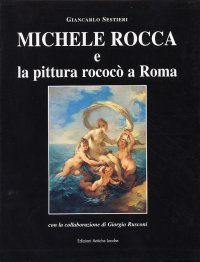
Michele Rocca e la pittura rococo a Roma
Brescia, 2004; bound in a case, pp. 310, b/w and col. ill., tavv., cm 24,5x31,5.
FREE (cover price: € 180.00)
Cucinare per gli amici
Translation by S. Mancuso.
Milano, 2012; clothbound, pp. 269, ill., cm 21x26,5.
(Gli Illustrati).
FREE (cover price: € 29.90)
The Painted Closet of Lady Anne Bacon Drury
Meakin H.L
Ashgate Publishing Limited
English Text.
Aldershot, 2013; hardback, pp. 410, 31 b/w ill., 64 col. ill., cm 17x24.
ISBN: 0-7546-6397-3 - EAN13: 9780754663973
Subject: Painting
Period: 1800-1960 (XIX-XX) Modern Period
Languages: 
Weight: 1.17 kg
Within her massive country house, Lady Anne created a tiny painted room that she seems to have used as a kind of three-dimensional book. The walls consisted of panels of pictures and mottoes, grouped under Latin sentences. These panels can still be viewed in a Suffolk museum: Christchurch Mansion in Ipswich. Some panels point to classical and Biblical sources, and to popular emblem books. The sources of other panels are more recondite, while still others are original compositions by Lady Anne.
The panels exhibit a contemptus mundi theme and reflect a struggle with ambition, pride, and even despair. Some panels also appear to register carefully veiled but pointed critiques of political and religious events and figures. Lady Anne's painted closet or 'architext' is thus relevant to a wide range of early modern scholarship in various disciplines but is as yet largely unappreciated.
For the first time in four hundred years, this book fully describes the closet and places it in its personal, social, intellectual, and aesthetic contexts. It argues for the painted closet's importance for understanding early modern conceptualizations of private and public spaces, and for illuminating fundamental early modern habits of seeing and reading (especially combinations of text and image). Finally, this book explores the closet as an example of the ingenious ways in which female subjectivity found ways to express itself even within the constraints of early modern patriarchal society in England.

Pietro Bellotti Detto Canaletty. Un Vedutista Veneziano nella Francia dell'Ancien Régime
Officina Zanon 1946-2026. 80 anni di sapere artigiano-80 Years of craft knowledge. Ediz. bilingue

Conte e Mattarella. Sul palcoscenico e dietro le quinte del Quirinale. Un racconto sulle istituzioni
