






 LATEST ART BOOKS
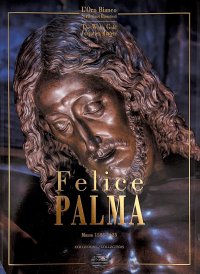
Felice Palma. Massa 1583-1625. Collezione / Collection.
Texts by Claudio Casini, Andrei Cristina, Ciarlo Nicola, Federici Fabrizio and Sara Ragni.
Italian and English Text.
Pontedera, 2024; bound in a case, pp. 289, b/w and col. ill., b/w and col. plates, cm 24,5x34.
(L'Oro Bianco. Straordinari Dimenticati. The White Gold Forgotten Masters).
cover price: € 160.00
|
Books included in the offer:
Felice Palma. Massa 1583-1625. Collezione / Collection.
Texts by Claudio Casini, Andrei Cristina, Ciarlo Nicola, Federici Fabrizio and Sara Ragni.
Italian and English Text.
Pontedera, 2024; bound in a case, pp. 289, b/w and col. ill., b/w and col. plates, cm 24,5x34.
(L'Oro Bianco. Straordinari Dimenticati. The White Gold Forgotten Masters).
FREE (cover price: € 160.00)
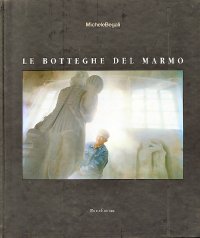
Le botteghe del marmo
Italian and English Text.
Ospedaletto, 1992; bound, pp. 153, 10 b/w ill., 60 col. ill., cm 24x29.
(Immagine).
FREE (cover price: € 34.49)
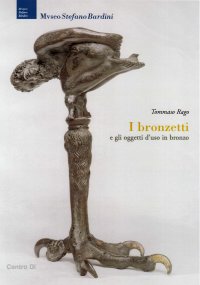
Museo Stefano Bardini. I Bronzetti e gli Oggetti d'Uso in Bronzo
Edited by Nesi A.
Firenze, 2009; paperback, pp. 191, 102 b/w ill., 7 col. ill., cm 17x24,5.
(Museo Stefano Bardini).
FREE (cover price: € 30.00)
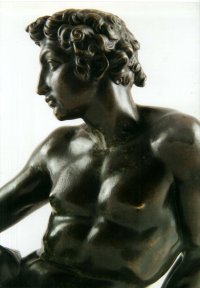
Bronzetti e Rilievi dal XV al XVIII Secolo
Bologna, 2015; 2 vols., bound in a case, pp. 729, ill., col. plates, cm 21,5x30,5.
FREE (cover price: € 90.00)
The Orsini Palace at Monte Giordano. Patronage and Public Image in Renaissance Rome
Kristin A. Triff
Harvey Miller Publishers
English Text.
London, 2022; clothbound, pp. 300, 150 b/w ill., 16 col. ill., cm 24x24.
series: HMAAI 2
ISBN: 1-905375-33-6 - EAN13: 9781905375332
Subject: Essays (Art or Architecture)
Languages: 
Weight: 0.53 kg
In addition to being the primary Roman stronghold of the Orsini, Monte Giordano was the site of influential architectural and artistic projects during the early Renaissance. Praised by prominent contemporary writers and architects including Giovanni Rucellai, Giorgio Vasari, and Lorenzo Valla, Monte Giordano served as a model for the ideal palaces discussed in treatises by Filarete and Paolo Cortesi. As this book demonstrates, it should also be acknowledged as Rome's earliest example of a Renaissance palace typology. Ultimately, Monte Giordano's evolution responded to the waning fortunes of Rome's baronial nobility, as the Orsini cultivated an intentionally feudal image of power that reacted to the opulent palaces of the curial families, and to the changing social and political topography of a city increasingly dominated by the papacy.

Pietro Bellotti Detto Canaletty. Un Vedutista Veneziano nella Francia dell'Ancien Régime

H-BI(M)ON. Heritage. Building Information Modelling/MONitoring. Dalla realtà al modello e ritorno
Conte e Mattarella. Sul palcoscenico e dietro le quinte del Quirinale. Un racconto sulle istituzioni
