




 LATEST ART BOOKS
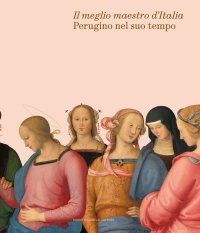
Perugino e il Suo Tempo. "Il Meglio Maestro d'Italia"
Perugia, Galleria Nazionale dell'Umbria, March 4 - June 11, 2023.
Edited by Picchiarelli V. and Pierini M.
Milano, 2023; bound, pp. 592, 650 col. ill., cm 24x21.
cover price: € 40.00
|
Books included in the offer:
Perugino e il Suo Tempo. "Il Meglio Maestro d'Italia"
Perugia, Galleria Nazionale dell'Umbria, March 4 - June 11, 2023.
Edited by Picchiarelli V. and Pierini M.
Milano, 2023; bound, pp. 592, 650 col. ill., cm 24x21.
FREE (cover price: € 40.00)
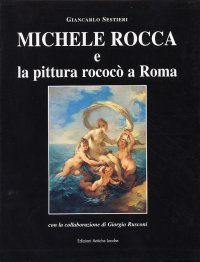
Michele Rocca e la pittura rococo a Roma
Brescia, 2004; bound in a case, pp. 310, b/w and col. ill., tavv., cm 24,5x31,5.
FREE (cover price: € 180.00)
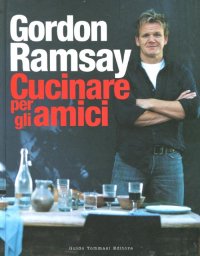
Cucinare per gli amici
Translation by S. Mancuso.
Milano, 2012; clothbound, pp. 269, ill., cm 21x26,5.
(Gli Illustrati).
FREE (cover price: € 29.90)
The New American Abstraction 1950-1970
Humblet Claudine
Skira
English and French Text.
Milano, 2007; 3 vols., bound in a case, pp. 2096, b/w and col. ill., tavv., cm 25x29.
(Arte Moderna. Cataloghi).
series: Arte Moderna. Cataloghi
ISBN: 88-6130-072-3 - EAN13: 9788861300729
Subject: Design,Essays (Art or Architecture),Graphic Arts (Prints, Drawings, Engravings, Miniatures),Painting,Sculpture
Period: 1800-1960 (XIX-XX) Modern Period,1960- Contemporary Period
Places: Out of Europe
Extra: Impressionism/Expressionism,US Art
Languages: 

Weight: 12.85 kg
This deluxe 3-volume edition, including shoulder-strap case, offers an engaging, visually stunning and highly informative analysis of the forty-nine artists featured in over nine hundred full-colour plates.
The title of this work takes its inspiration from Towards a New Abstraction, the catalogue of an exhibition organised by Ben Heller in 1963 at the Jewish Museum in New York, which brought together artists such as Frank Stella, Paul Brach, Kenneth Noland and Raymond Parker.
The theme unites the artists of this "New Abstraction" through their spirit, as opposed to the "spirit of the times" reflected in other movements such as Minimalism and Pop Art. "New Abstraction" is not to be taken as a movement (some evidence clearly shows the importance of Abstract Expressionism for some) but as a meeting of attempts in structure that created attraction rather than grouping. There is no single Zeitgeist;, apart from its somewhat complex origins, "New Abstraction" was intersected at the time with other impulses and currents, in particular with Neo-Dadaism, the outset of Minimalism and process art.
This major achievement is an authoritative contribution to what has been called "New Abstraction" and an essential addition to any collection on 20th century art.