






 LATEST ART BOOKS
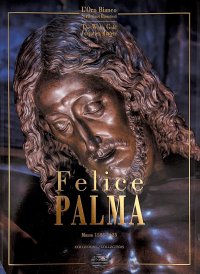
Felice Palma. Massa 1583-1625. Collezione / Collection.
Texts by Claudio Casini, Andrei Cristina, Ciarlo Nicola, Federici Fabrizio and Sara Ragni.
Italian and English Text.
Pontedera, 2024; bound in a case, pp. 289, b/w and col. ill., b/w and col. plates, cm 24,5x34.
(L'Oro Bianco. Straordinari Dimenticati. The White Gold Forgotten Masters).
cover price: € 160.00
|
Books included in the offer:
Felice Palma. Massa 1583-1625. Collezione / Collection.
Texts by Claudio Casini, Andrei Cristina, Ciarlo Nicola, Federici Fabrizio and Sara Ragni.
Italian and English Text.
Pontedera, 2024; bound in a case, pp. 289, b/w and col. ill., b/w and col. plates, cm 24,5x34.
(L'Oro Bianco. Straordinari Dimenticati. The White Gold Forgotten Masters).
FREE (cover price: € 160.00)
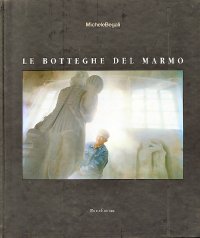
Le botteghe del marmo
Italian and English Text.
Ospedaletto, 1992; bound, pp. 153, 10 b/w ill., 60 col. ill., cm 24x29.
(Immagine).
FREE (cover price: € 34.49)
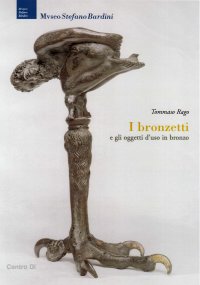
Museo Stefano Bardini. I Bronzetti e gli Oggetti d'Uso in Bronzo
Edited by Nesi A.
Firenze, 2009; paperback, pp. 191, 102 b/w ill., 7 col. ill., cm 17x24,5.
(Museo Stefano Bardini).
FREE (cover price: € 30.00)
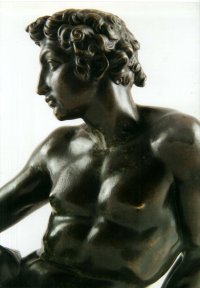
Bronzetti e Rilievi dal XV al XVIII Secolo
Bologna, 2015; 2 vols., bound in a case, pp. 729, ill., col. plates, cm 21,5x30,5.
FREE (cover price: € 90.00)
'The poem of the understanding is philosophy': Novalis and the art of self-criticism
Fernando Manuel Ferreira Silva
Mimesis
English Text.
Sesto San Giovanni, 2025; paperback, pp. 300, cm 17x24.
ISBN: 88-6977-396-5 - EAN13: 9788869773969
Languages: 
Weight: 0 kg
The current volume attempts to determine how Novalis solves his spiritual conflict under the guise of a theory of opposites, in light of his reading of the same problem in Reinhold and Fichte. Novalis’ conclusion is that of a hypothesis of a reciprocal dynamism, a living and cumulative alternation between opposites, which shall originate the I and inaugurate its reflexive self-understanding; namely, the hypothesis of uniting feeling and reflection, essential components of the I as a being of opposites, under the form of a union in disunion, wherein a real impossibility of uniting the opposites and an ideal possibility of doing so simultaneously coexist; a proposition which will lead Novalis to part from his teachers, and involves a profound reflection on the need to reassess the concepts of I, of identity and thought itself – a genuine critique of the self – which gradually carves out the image of Novalis as an autonomous and original thinker within the scope of German Idealism.

Pietro Bellotti Detto Canaletty. Un Vedutista Veneziano nella Francia dell'Ancien Régime

Francesco Ruschi e l'«abundantia» barocca. Pittura e collezionismo tra Roma e la Serenissima
Napoli oltre Napoli. I quartieri del terremoto nell'area metropolitana. 1980-2025
Il surrealismo piemontese. Lorenzo Alessandri, incisore e pittore. Ediz. illustrata
Conte e Mattarella. Sul palcoscenico e dietro le quinte del Quirinale. Un racconto sulle istituzioni
