






 LATEST ART BOOKS
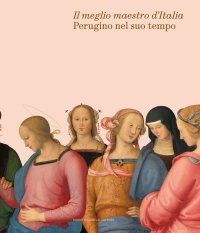
Perugino e il Suo Tempo. "Il Meglio Maestro d'Italia"
Perugia, Galleria Nazionale dell'Umbria, March 4 - June 11, 2023.
Edited by Picchiarelli V. and Pierini M.
Milano, 2023; bound, pp. 592, 650 col. ill., cm 24x21.
cover price: € 40.00
|
Books included in the offer:
Perugino e il Suo Tempo. "Il Meglio Maestro d'Italia"
Perugia, Galleria Nazionale dell'Umbria, March 4 - June 11, 2023.
Edited by Picchiarelli V. and Pierini M.
Milano, 2023; bound, pp. 592, 650 col. ill., cm 24x21.
FREE (cover price: € 40.00)
Michele Rocca e la pittura rococo a Roma
Brescia, 2004; bound in a case, pp. 310, b/w and col. ill., tavv., cm 24,5x31,5.
FREE (cover price: € 180.00)
Cucinare per gli amici
Translation by S. Mancuso.
Milano, 2012; clothbound, pp. 269, ill., cm 21x26,5.
(Gli Illustrati).
FREE (cover price: € 29.90)
Fra Angelico to Leonardo. Italian Renaissance Drawings. [Clothbound edition]
Faietti Marzia - Chapman Hugo
British Museum Press
London, The British Museum, 22 April - 25 July 2010.
English Text.
London, 2010; clothbound, pp. 344, 330 col. ill., cm 24x28.
Other editions available: Paperback edition (ISBN: 9780714126678)
ISBN: 0-7141-2668-3 - EAN13: 9780714126685
Subject: Graphic Arts (Prints, Drawings, Engravings, Miniatures)
Period: 1400-1800 (XV-XVIII) Renaissance
Places: Italy
Languages: 
Weight: 2.15 kg
A unique collaboration between the Uffizi in Florence and the British Museum, the display charts the increasing importance of drawing during this period, featuring works by Leonardo da Vinci, Fra Angelico, Jacopo and Gentile Bellini, Botticelli, Carpaccio, Filippo Lippi, Mantegna, Michelangelo, Verrocchio and Titian.
In 15th-century Italy there was a fundamental shift in style and artistic thinking in the use of preparatory drawings. What began as a means of preserving artistic ideas became the ideal way to perfect more naturalistic forms and perspective - a new approach by painters, sculptors and architects.
Infrared and other technology used in conservation research provide fresh insights into how drawing allowed painters to experiment and explore with a freedom not always reflected in their finished works. Examples in the exhibition show the trend towards depiction of movement and expression of emotion, often inspired by classical antiquity.
This exhibition is a unique opportunity to discover the evolution of drawing which laid the foundations of the High Renaissance style of Michelangelo and Raphael.

Pietro Bellotti Detto Canaletty. Un Vedutista Veneziano nella Francia dell'Ancien Régime
Officina Zanon 1946-2026. 80 anni di sapere artigiano-80 Years of craft knowledge. Ediz. bilingue

Conte e Mattarella. Sul palcoscenico e dietro le quinte del Quirinale. Un racconto sulle istituzioni
