






 LATEST ART BOOKS
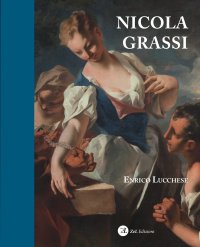
Nicola Grassi (1682-1748)
Treviso, 2019; hardback, pp. 532, b/w and col. ill., b/w and col. plates, cm 24x30.
cover price: € 90.00
|
Books included in the offer:
Nicola Grassi (1682-1748)
Treviso, 2019; hardback, pp. 532, b/w and col. ill., b/w and col. plates, cm 24x30.
FREE (cover price: € 90.00)
Carlo Dolci. Complete Catalogue of the Paintings
English Text.
Firenze, 2015; paperback, pp. 392, 100 b/w ill., 186 col. ill., cm 24,5x28,5.
FREE (cover price: € 150.00)

Aleksandr Deineka (1899-1969). An avant-garde for the proletariat
De Magistris Alessandro - Ekaterina Degot
Fundación Juan March
Madrid, Fundación Juan March, 7 octubre 2011 - 15 enero 2012.
English Text.
Madrid, 2011; hardback, pp. 440, col. ill., cm 29x34.
ISBN: 84-7075-592-7 - EAN13: 9788470755927
Subject: Monographs (Painting and Drawing)
Period: 1800-1960 (XIX-XX) Modern Period,1960- Contemporary Period
Languages: 
Weight: 2.48 kg
In 1985, a time when the Soviet regime was still in power, the Fundación Juan March organized an exhibition titled The Russian Avant-Garde, 1910-1930. Ludwig Museum and Collection, the first show in Spain to display art works by the Russian avant-garde. In the past 23 years, various exhibitions devoted to the leading figures of this movement-among them, Kazimir Malevich (1993), Aleksandr Rodchenko (2001), and Liubov Popova (2004)-have been staged at the Fundación, including the recent Total Enlightenment: Conceptual Art in Moscow, 1960-1990, held in 2008. This show brought together the work of a number of Soviet artists such as Ilya Kabakov, Erik Bulatov, Vitalii Komar and Aleksandr Melamid. Straddling both concept art and their own particular style of Soviet pop art, these artists focused on and raised issues regarding Soviet culture during the Stalin era, from his rise to power following Lenin's death in 1924 to his death in 1953.
La defensa de Petrogrado, 1928 La defensa de Petrogrado, 1928 (Museo Estatal de las Fuerzas Armadas)
These exhibitions therefore addressed two moments in Russian history: the great experiment that was the Russian avant-garde in the years preceding the Stalin era and the unofficial and decidedly postmodern form of Soviet art that emerged a decade after Stalin's death. In order to complete this historical overview, it became obvious that the interval between both periods, a defining moment in the history of modern Russia, deserved our attention. And so, Soviet revolutionary art and art produced during the Stalin era, in particular, are at the core of the present exhibition.
Deineka's straightforward painterly style coupled with the ambivalence-or ambiguity-of his art and persona serve as a representative example. The artist received his formal training at institutions traditionally influenced by avant-garde art and formed part of the last remaining constructivist groups (such as October and OST). Because of this, and in spite of his commitment to the revolution and the formation of a socialist state, he was accused of adhering to formalism.
The exhibition also presents a selection of magazines, posters, books, documents, objects, and works by other Russian avant-garde artists-with a special focus on their revolutionary output-that mirror the "ambivalent" and "ambiguous" quality of Deineka's art and career. Presented together, these works expose a unique, coherent (and unexplored) set of relationships between socialist realism and the Russian avant-garde.

Pietro Bellotti Detto Canaletty. Un Vedutista Veneziano nella Francia dell'Ancien Régime

Conte e Mattarella. Sul palcoscenico e dietro le quinte del Quirinale. Un racconto sulle istituzioni
