




 LATEST ART BOOKS
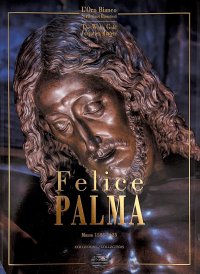
Felice Palma. Massa 1583-1625. Collezione / Collection.
Texts by Claudio Casini, Andrei Cristina, Ciarlo Nicola, Federici Fabrizio and Sara Ragni.
Italian and English Text.
Pontedera, 2024; bound in a case, pp. 289, b/w and col. ill., b/w and col. plates, cm 24,5x34.
(L'Oro Bianco. Straordinari Dimenticati. The White Gold Forgotten Masters).
cover price: € 160.00
|
Books included in the offer:
Felice Palma. Massa 1583-1625. Collezione / Collection.
Texts by Claudio Casini, Andrei Cristina, Ciarlo Nicola, Federici Fabrizio and Sara Ragni.
Italian and English Text.
Pontedera, 2024; bound in a case, pp. 289, b/w and col. ill., b/w and col. plates, cm 24,5x34.
(L'Oro Bianco. Straordinari Dimenticati. The White Gold Forgotten Masters).
FREE (cover price: € 160.00)
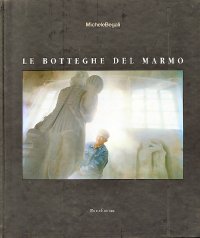
Le botteghe del marmo
Italian and English Text.
Ospedaletto, 1992; bound, pp. 153, 10 b/w ill., 60 col. ill., cm 24x29.
(Immagine).
FREE (cover price: € 34.49)
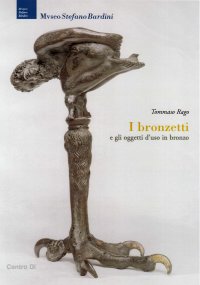
Museo Stefano Bardini. I Bronzetti e gli Oggetti d'Uso in Bronzo
Edited by Nesi A.
Firenze, 2009; paperback, pp. 191, 102 b/w ill., 7 col. ill., cm 17x24,5.
(Museo Stefano Bardini).
FREE (cover price: € 30.00)
Bronzetti e Rilievi dal XV al XVIII Secolo
Bologna, 2015; 2 vols., bound in a case, pp. 729, ill., col. plates, cm 21,5x30,5.
FREE (cover price: € 90.00)
Syracuse and the Rocky Necropolis of Pantalica
Dario Scarfì
SAGEP
English Text.
Genova, 2023; paperback, pp. 80, col. ill., cm 15x21.
(I Tesori d'Italia e l'Unesco).
series: I Tesori d'Italia e l'Unesco
EAN13: 9791255900061
Subject: Collections,Essays on Ancient Times,Travel's Culture
Period: 0-1000 (0-XI) Ancient World
Places: Italy,Sicily
Languages: 
Weight: 1 kg
In the Necropolis there are remains from the Byzantine era, as well as the remains of the Anaktoron (Princes Palace).
The second part is instead ancient Syracuse, which includes Ortygia, the first nucleus of this city founded by Greek colonists who arrived from Corinth in the 8th century BC.
The site of the city (which Cicero called the largest and most beautiful of all Greek cities) still houses the remains of the Temple of Athena (5th century BC), later converted into a cathedral. The ruins of a Greek theatre, a Roman amphitheatre, and many other buildings are also visible. These testimonies substantiate the turbulent history of Sicily from the domination of the Byzantine Empire to that of the Bourbons, passing via Arabs, Normans, the domination of Frederick II (Hohenstaufen, 1197-1250) and that of the Aragonese. Ancient Syracuse represents a testimony, unique of its kind, of the development of the Mediterranean civilization over three millennia.